
Mental health challenges like low mood, anxiety, and emotional exhaustion are increasingly common in the United States. While travel is not a replacement for professional mental health care, research in psychology and behavioral health shows that travel can play a supportive role in improving mood and emotional well-being.
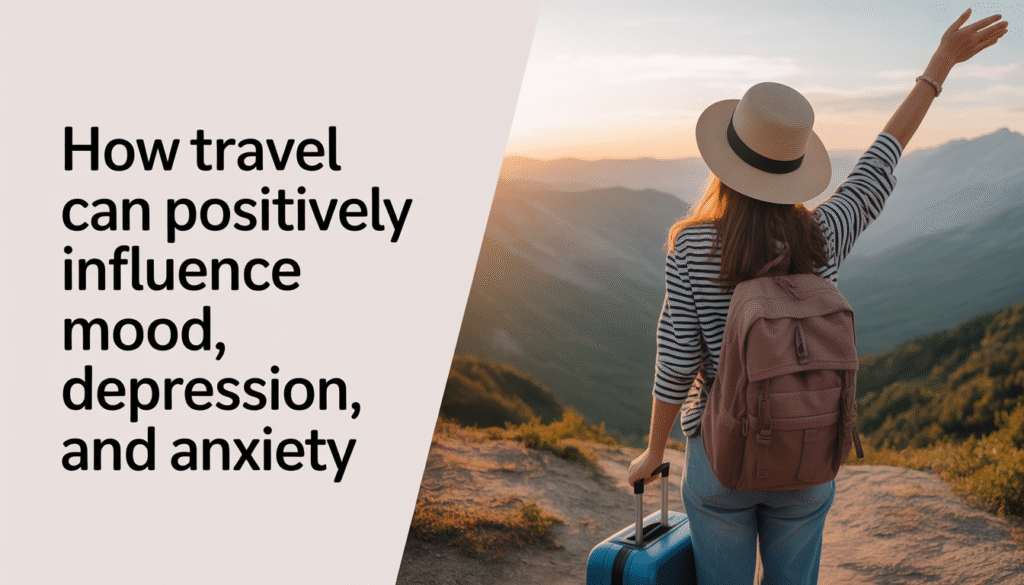
By changing environments, reducing stress, and introducing new experiences, travel can help reset the mind and support mental balance.
1. Travel Breaks the Stress Cycle
Daily routines, deadlines, and constant screen exposure can keep the brain in a prolonged stress response. Travel interrupts this cycle.
Studies show that stepping away from routine can lower cortisol levels, helping the nervous system calm down and improve emotional regulation.
2. New Environments Can Lift Mood
Environmental psychology research suggests that exposure to new places—especially natural settings—can increase positive emotions.
Sunlight, fresh air, and scenic surroundings stimulate neurotransmitters linked to happiness and motivation.
3. Reduces Symptoms of Mild Depression
Travel provides novelty, social interaction, and purpose—factors often reduced during depressive states.
While travel does not treat clinical depression, studies show that positive experiences and meaningful engagement can temporarily reduce depressive symptoms and improve outlook.
4. Helps Ease Anxiety Through Mental Reset
Anxiety often thrives on repetitive thoughts and constant pressure. Travel shifts attention outward, breaking mental loops.
Engaging the senses in new environments can promote mindfulness and reduce anxious rumination.
5. Encourages Physical Activity That Supports Mental Health
Travel naturally increases movement—walking, sightseeing, hiking, or swimming.
Physical activity is strongly linked to:
- Reduced anxiety
- Improved mood
- Better sleep
- Increased self-esteem
6. Improves Sleep Patterns
Mental health and sleep are closely connected. Travel often improves sleep by reducing work stress and digital overload.
Better sleep supports emotional stability and stress resilience.
7. Strengthens Social Connection
Traveling with loved ones or meeting new people enhances social bonding. Social connection is a key protective factor against depression and loneliness.
Shared experiences create emotional warmth and belonging.
8. Builds Emotional Resilience and Confidence
Navigating unfamiliar places builds problem-solving skills and self-confidence. Psychological research links novel challenges with improved emotional resilience.
9. Encourages Mindfulness and Presence
Travel naturally brings people into the present moment. Mindfulness is associated with reduced anxiety and better emotional control.
Being present allows the mind to rest from constant worry.
10. Creates Positive Memories That Last
Research shows that experiences—especially travel—create lasting positive memories that continue to improve mood long after the trip ends.
Positive recall can help counter negative thought patterns.
Important Mental Health Note
Travel can support emotional well-being, but it is not a cure for depression or anxiety disorders. Anyone experiencing persistent or severe symptoms should seek professional mental health care.
Travel works best as a complement to healthy routines, therapy, and self-care.
Travel has the power to spark positive mood changes by reducing stress, increasing movement, strengthening connections, and refreshing the mind. For many Americans, even short trips can provide emotional relief and renewed perspective.
Sometimes, the mind just needs a change of scenery.