
In today’s fast-paced American lifestyle—filled with deadlines, digital overload, and rising stress levels—mental health has become a national priority. According to public health data in the United States, anxiety, burnout, and depression affect millions of adults each year.
While therapy, exercise, and mindfulness remain essential, research increasingly shows that travel is one of the best ways to support mental well-being. Beyond relaxation, travel activates powerful psychological and neurological mechanisms that improve mood, resilience, and emotional health.
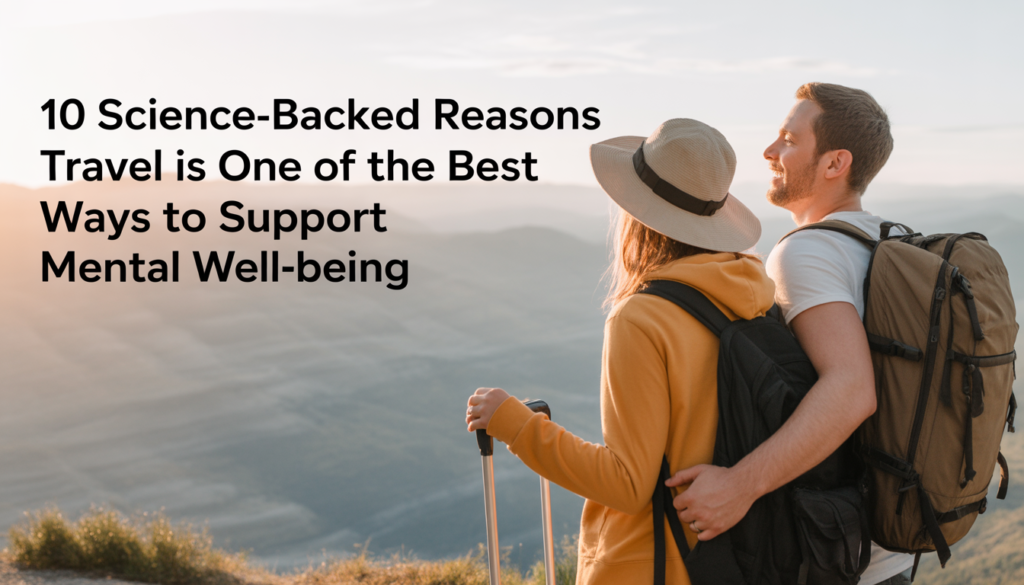
Here are 10 science-backed reasons travel supports mental well-being, explained through evidence-based insights and reader-friendly guidance.
1. Travel Reduces Chronic Stress
Chronic stress elevates cortisol levels, contributing to anxiety, sleep problems, and immune suppression.
Research in occupational health psychology shows that vacations significantly reduce perceived stress and burnout. Even short trips can lower stress markers and improve emotional recovery.
For many Americans balancing demanding work schedules, stepping away from routine environments helps reset the nervous system.
2. It Increases Dopamine and Positive Anticipation
Planning a trip triggers dopamine release—the neurotransmitter linked to motivation and pleasure. Interestingly, studies show that anticipating travel can boost happiness even before departure.
This “anticipatory happiness effect” explains why booking a trip often improves mood weeks in advance.
3. Travel Enhances Neuroplasticity
Neuroplasticity refers to the brain’s ability to form new neural connections. Exposure to unfamiliar environments, languages, and cultures stimulates cognitive flexibility.
Neuroscience research suggests that novel experiences strengthen neural pathways associated with creativity and adaptability—key factors in emotional resilience.
4. It Breaks Negative Thought Patterns
Mental health challenges such as anxiety and mild depression often involve repetitive thought cycles.
Travel disrupts these patterns by:
- Changing physical surroundings
- Introducing new routines
- Engaging attention outward
Environmental psychology studies indicate that new contexts help interrupt rumination and promote mental clarity.
5. Nature-Based Travel Reduces Anxiety
Outdoor travel—such as visiting U.S. national parks, beaches, or mountains—has measurable psychological benefits.
Research in environmental medicine shows that time in nature:
- Lowers cortisol
- Reduces heart rate
- Improves mood stability
For Americans, destinations like Yellowstone, Yosemite, and coastal retreats offer accessible mental health support through nature immersion.
6. Travel Strengthens Social Connection
Strong social bonds are among the strongest predictors of long-term mental health.
Travel fosters:
- Shared experiences
- Meaningful conversations
- Deeper relationship bonding
Social psychology research confirms that shared novel experiences strengthen interpersonal connections more than routine activities.
7. It Improves Sleep Quality
Chronic stress disrupts circadian rhythms. Travel—particularly when aligned with natural daylight exposure and increased physical activity—can help reset sleep cycles.
Studies in sleep science suggest that time away from artificial light and work-related stress improves melatonin regulation and sleep depth.
Better sleep directly enhances emotional regulation and cognitive performance.
8. Travel Builds Emotional Resilience
Unexpected travel challenges—missed flights, navigation issues, cultural differences—require adaptability.
Psychological research indicates that successfully navigating small stressors builds resilience, increasing confidence and emotional flexibility.
This resilience often transfers into everyday life after returning home.
9. It Encourages Mindfulness and Presence
Travel naturally increases mindfulness. New environments activate the brain’s attention networks, encouraging presence in the moment.
Unlike routine settings, unfamiliar locations require active engagement—reducing autopilot behavior and enhancing awareness.
Mindfulness-based studies show this present-moment awareness reduces anxiety and depressive symptoms.
10. Travel Creates Meaningful Memories
Positive memory formation plays a significant role in long-term happiness.
Research in positive psychology shows that experiences—especially travel—produce more lasting satisfaction than material purchases.
Memories from travel:
- Strengthen identity
- Increase life satisfaction
- Provide emotional anchors during stressful times
Travel and Mental Health in the USA
In the United States, workplace stress and digital dependency are rising. Travel provides a structured break from constant connectivity and environmental triggers.
Even short domestic trips—weekend road trips, state park visits, or city explorations—offer measurable mental health benefits.
Importantly, travel does not require international flights or luxury accommodations. The psychological benefits come from novelty, movement, connection, and environmental change.
Practical Tips to Maximize Mental Health Benefits
To fully support mental well-being through travel:
- Limit work emails and digital distractions
- Spend time outdoors daily
- Engage in cultural or local experiences
- Prioritize sleep and hydration
- Reflect or journal during your trip
These intentional habits amplify the psychological return on travel.
Science continues to confirm that travel is one of the best ways to support mental well-being. From stress reduction and improved sleep to enhanced neuroplasticity and emotional resilience, the benefits extend far beyond relaxation.
For individuals across the United States, travel is not merely leisure—it is preventive mental health care supported by research.
Sometimes the most powerful therapy is simply changing your view.