
In today’s always-on American lifestyle, stress, anxiety, and emotional fatigue have become common. Mental health research increasingly shows that travel—when done mindfully—can support emotional balance, reduce stress, and improve overall well-being. Travel isn’t a cure, but it can be a powerful tool for mental wellness.
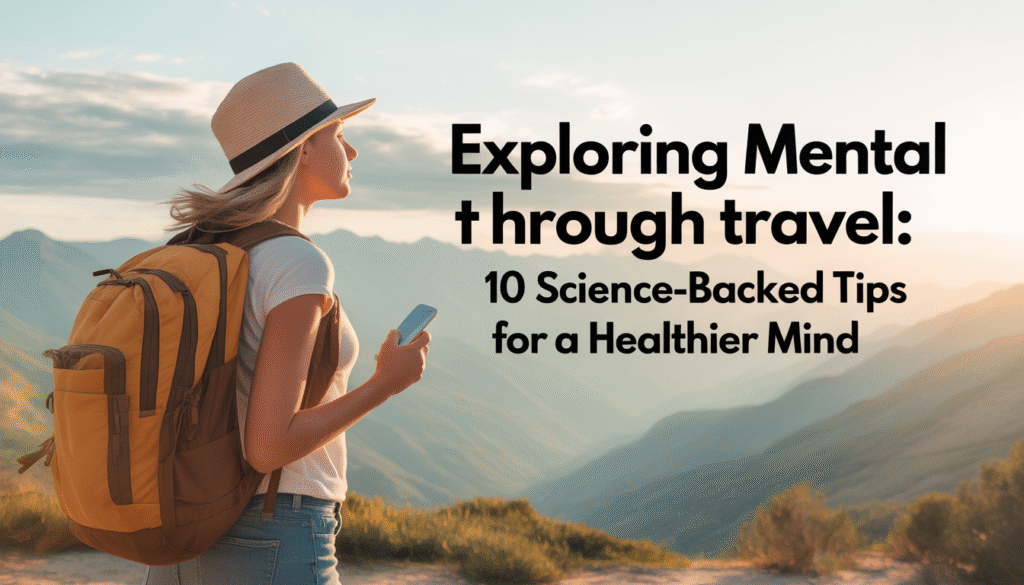
Here are 10 research-supported tips on how to explore mental health through travel in a meaningful, healthy way.
1. Choose Destinations That Reduce Stress
Natural settings like beaches, mountains, and parks are linked to lower stress and improved mood. Nature exposure helps calm the nervous system and promotes relaxation.
2. Travel With Purpose, Not Pressure
Avoid over-scheduling. Slow, intentional travel reduces anxiety and allows the mind to rest. Less rushing equals more mental clarity.
3. Stay Active While Exploring
Walking tours, hiking, swimming, or biking increase physical activity. Exercise is strongly associated with improved mood and reduced anxiety.
4. Disconnect From Digital Overload
Limiting emails and social media while traveling helps reset mental focus. Reducing screen time supports better sleep and emotional balance.
5. Practice Mindfulness During Your Journey
Engage your senses—notice sights, sounds, and smells. Mindfulness reduces rumination and improves emotional regulation.
6. Prioritize Sleep and Recovery
Travel is more restorative when sleep is protected. Quality sleep supports mood, memory, and stress resilience.
7. Connect With People and Cultures
Social interaction reduces feelings of loneliness. Meeting new people or deepening bonds with travel companions supports mental well-being.
8. Allow Room for Creativity and Curiosity
New environments stimulate creativity and flexible thinking. Novel experiences refresh the brain and inspire fresh perspectives.
9. Reflect and Journal Your Experiences
Writing about travel experiences helps process emotions and strengthen positive memories. Reflection supports long-term mental benefits.
10. Bring Travel Lessons Back Home
Apply what you learned—slower living, more movement, better boundaries—to everyday life. Travel’s benefits last longer when integrated.
Important Mental Health Reminder
Travel supports mental wellness, but it is not a substitute for professional mental health care. If symptoms of anxiety or depression persist, seek help from a qualified provider.
Exploring mental health through travel is about more than seeing new places—it’s about creating space for emotional recovery, growth, and balance. With mindful planning, travel can become a powerful part of a healthy mental wellness routine.
Sometimes, healing begins with a change of scenery.