
Why you shouldn’t eat a full stomach at night before sleeping is a question deeply rooted in both traditional wisdom and modern science. In the United States of America (USA), late dinners, heavy night meals, and bedtime snacking are increasingly common due to long work hours and screen-heavy lifestyles. However, nutrition science, sleep research, and gastroenterology literature consistently show that eating a heavy meal close to bedtime negatively affects digestion, sleep quality, metabolism, and long-term health.
What Happens to Your Body at Night
Human biology follows a circadian rhythm, a 24-hour internal clock that regulates digestion, hormone release, and metabolism.
According to chronobiology research:
- Metabolic rate slows down at night
- Insulin sensitivity decreases
- Digestive enzymes are less active
Eating large meals during this phase forces the body to work against its natural rhythm.
Scientific Reasons You Shouldn’t Eat a Full Stomach at Night
1. Disrupts Sleep Quality
Sleep science studies show that heavy meals before bedtime:
- Increase body temperature
- Activate the digestive system
- Prevent deep, restorative sleep
People who eat large late-night meals experience more night awakenings, lighter sleep stages, and daytime fatigue.
2. Increases Risk of Acid Reflux and Heartburn
When lying down with a full stomach:
- Stomach acid can move upward into the esophagus
- Lower esophageal sphincter pressure decreases
Gastroenterology literature confirms a strong link between late-night heavy meals and GERD (acid reflux), a common condition in the USA.
3. Impairs Fat Metabolism and Promotes Weight Gain
At night:
- Insulin sensitivity is reduced
- Excess calories are more likely stored as fat
Studies in metabolic health show that late heavy meals are associated with increased abdominal fat and higher BMI, independent of total calorie intake.
4. Raises Blood Sugar Levels
Eating a large dinner leads to prolonged elevated blood glucose levels during sleep.
For individuals in the USA at risk of:
- Type 2 diabetes
- Prediabetes
- Metabolic syndrome
Late-night heavy eating worsens glycemic control and insulin resistance.
5. Overloads the Digestive System
Digestion requires significant energy and blood flow. At night, the body prioritizes:
- Cellular repair
- Hormonal regulation
- Brain recovery
A full stomach redirects energy away from these essential nighttime processes, reducing overall recovery.
6. Disrupts Growth Hormone Release
Growth hormone, crucial for:
- Muscle repair
- Fat metabolism
- Anti-aging processes
is released primarily during deep sleep. Heavy meals before bed reduce deep sleep stages, indirectly lowering growth hormone secretion.
7. Affects Gut Health and Microbiome
Emerging research suggests that late heavy meals:
- Alter gut microbiota rhythms
- Increase inflammation
- Affect nutrient absorption
Gut health is closely tied to immune function and mental health.
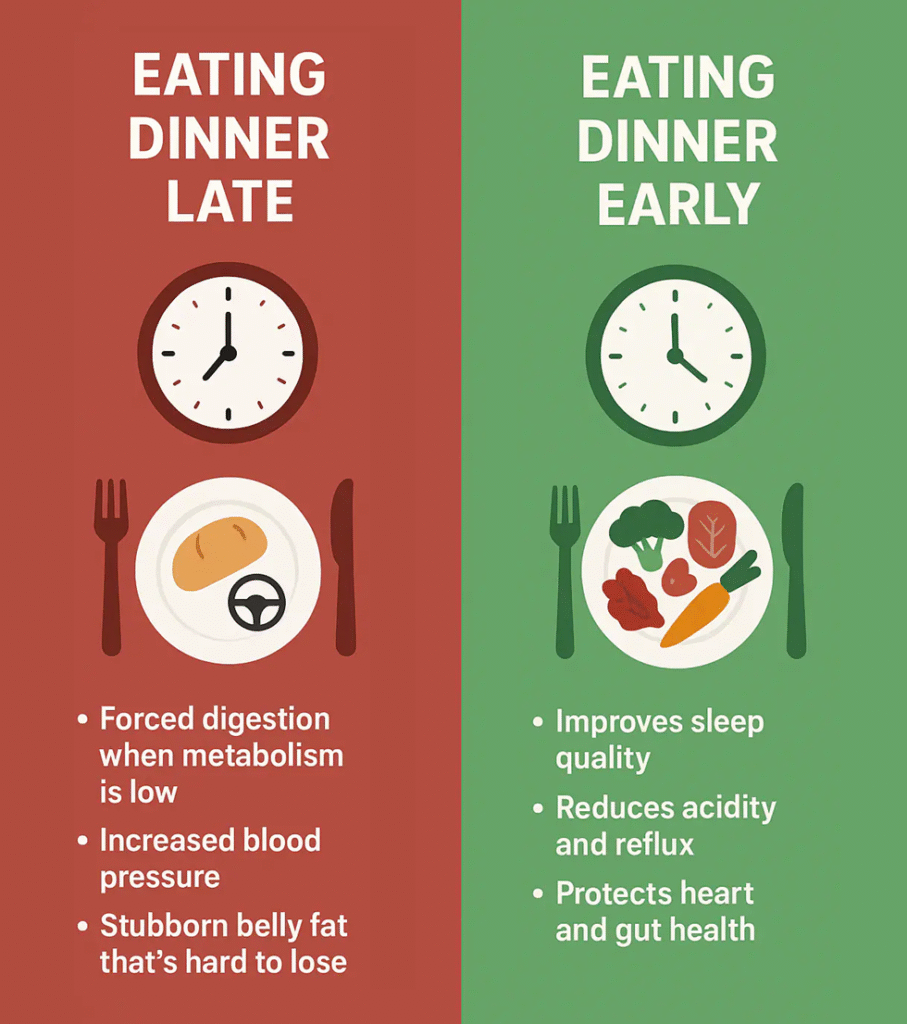
How Late Is Too Late to Eat?
Nutrition and sleep experts generally recommend:
- Finish dinner 2–3 hours before bedtime
- Choose lighter, easily digestible foods at night
This aligns with metabolic and circadian research.
What to Eat If You’re Hungry at Night
If hunger strikes close to bedtime, choose light options:
- Greek yogurt
- A small banana
- Herbal tea
- A handful of nuts
These support sleep without overloading digestion.
Common Myths About Night Eating
Myth: Eating at night automatically causes weight gain.
Truth: It’s the timing and quantity, not just calories.
Myth: Skipping dinner is healthier.
Truth: Balanced, early dinners support better metabolic health.
USA Lifestyle & Night Eating Habits
In the USA, late dinners are often influenced by:
- Work schedules
- Screen time
- Emotional eating
Public health research encourages mindful meal timing as part of preventive health care.
Understanding why you shouldn’t eat a full stomach at night before sleeping empowers better lifestyle choices. Scientific evidence clearly shows that early, lighter dinners support better sleep, digestion, metabolism, and long-term health. For individuals across the United States of America, aligning meal timing with natural biological rhythms is a simple yet powerful health upgrade.
Eat to fuel your day—rest to restore your night.