
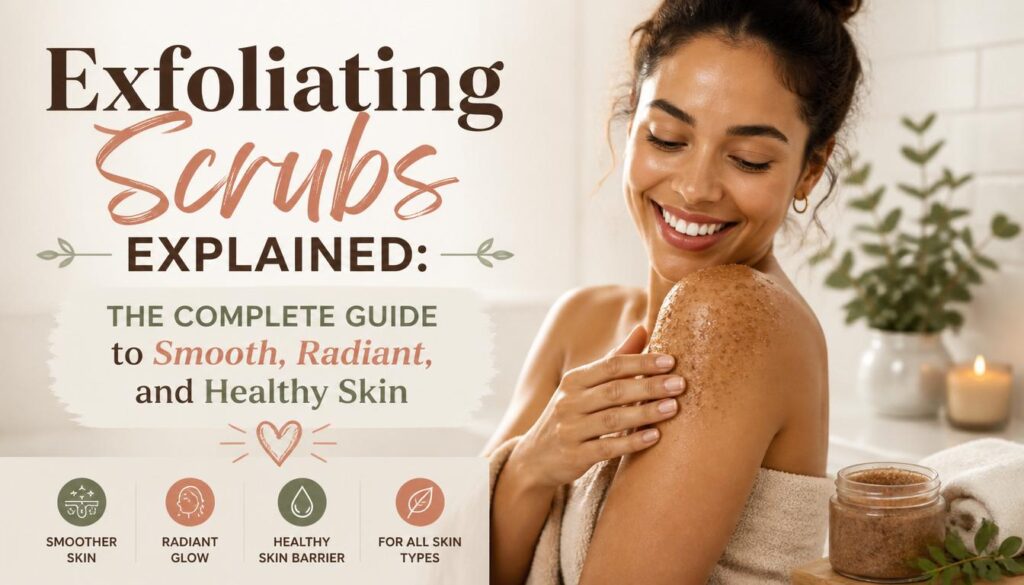
An exfoliating scrub is a skincare product designed to remove dead skin cells, excess oil, dirt, and impurities from the skin’s surface through gentle physical exfoliation. Regular use of an exfoliating scrub can help improve skin texture, unclog pores, reduce dullness, enhance product absorption, and promote a brighter, smoother complexion. When used correctly, exfoliating scrubs support healthy skin renewal and contribute to a more radiant appearance.
Introduction
Healthy, glowing skin doesn’t happen by accident. Every day, our skin is exposed to environmental pollutants, makeup residue, excess oil, sweat, and dead skin cell buildup. Over time, these factors can leave skin looking dull, rough, congested, and uneven.
One of the most effective ways to restore brightness and improve skin texture is through regular exfoliation.
Among the many exfoliation methods available today, exfoliating scrubs remain one of the most popular and accessible skincare treatments. When formulated properly and used correctly, an exfoliating scrub can help reveal fresher, smoother, and healthier-looking skin while supporting the skin’s natural renewal process.
Modern exfoliating scrubs have evolved significantly from the harsh formulas of the past. Today’s advanced scrubs often combine gentle exfoliating particles with nourishing ingredients such as botanical extracts, antioxidants, vitamins, minerals, and moisturizing agents to provide a balanced skincare experience.
This comprehensive guide explores everything you need to know about exfoliating scrubs, including their benefits, ingredients, application techniques, common mistakes, and how they fit into a modern skincare routine.
What Is an Exfoliating Scrub?
An exfoliating scrub is a skincare treatment designed to remove dead skin cells and surface debris through physical exfoliation.
These products contain small particles or polishing agents that gently buff the skin when massaged onto the face or body.
The primary goals of exfoliation include:
- Removing dead skin buildup
- Smoothing rough texture
- Unclogging pores
- Improving skin tone
- Enhancing radiance
- Supporting healthy skin turnover
Unlike cleansers, which primarily remove dirt and oil, exfoliating scrubs actively help shed old skin cells that can accumulate on the skin’s surface.
Understanding the Skin’s Natural Renewal Process
The skin naturally renews itself approximately every 28 to 40 days, depending on age and skin condition.
During this cycle:
- New skin cells are created in deeper layers.
- Cells gradually move toward the surface.
- Dead skin cells accumulate and eventually shed.
As we age, this process slows down.
The result may include:
- Dull skin
- Uneven texture
- Dry patches
- Enlarged pores
- Fine lines
- Reduced radiance
Exfoliation helps support this natural renewal process by removing excess dead skin cells that remain on the surface.
Why Exfoliation Is Essential for Healthy Skin
1. Removes Dead Skin Cells
Dead skin cell buildup is one of the most common causes of dull skin.
Regular exfoliation helps reveal fresher skin underneath.
Benefits include:
- Brighter complexion
- Improved texture
- Smoother appearance
2. Unclogs Pores
Pores can become clogged with:
- Oil
- Dirt
- Makeup
- Dead skin cells
Exfoliating scrubs help reduce congestion and support clearer-looking skin.
3. Improves Product Absorption
When dead skin cells accumulate on the surface, skincare products may struggle to penetrate effectively.
Exfoliation allows:
- Serums
- Moisturizers
- Treatments
to absorb more efficiently.
4. Promotes a Healthy Glow
One of the most noticeable benefits of exfoliation is increased radiance.
Freshly exfoliated skin often appears:
- Brighter
- Smoother
- More youthful
Types of Exfoliation
Physical Exfoliation
Physical exfoliation involves manually removing dead skin cells using particles or tools.
Examples include:
- Exfoliating scrubs
- Facial brushes
- Cleansing devices
Chemical Exfoliation
Chemical exfoliation uses acids to dissolve dead skin cells.
Common examples include:
- Glycolic acid
- Lactic acid
- Salicylic acid
Both methods can be effective when used appropriately.
Key Benefits of Exfoliating Scrubs
Smoother Skin Texture
Regular exfoliation helps reduce rough patches and uneven texture.
Brighter Complexion
Removing surface buildup allows skin to reflect light more evenly.
Reduced Appearance of Pores
While scrubs cannot permanently shrink pores, they can minimize their appearance by keeping them clean.
Improved Makeup Application
Exfoliated skin provides a smoother canvas for makeup.
Benefits include:
- Better foundation application
- Reduced flaking
- Enhanced finish
Support for Anti-Aging Goals
By encouraging skin renewal, exfoliation can help improve the appearance of:
- Fine lines
- Dullness
- Uneven texture
Ingredients Commonly Found in Exfoliating Scrubs
Natural Exfoliating Particles
Popular options include:
- Sugar crystals
- Bamboo powder
- Jojoba beads
- Rice powder
- Walnut shell powder
These ingredients physically polish the skin.
Botanical Extracts
Plant-based ingredients often provide additional skincare benefits.
Examples include:
Mint
Benefits:
- Refreshes skin
- Cooling sensation
- Invigorating feel
Green Tea
Benefits:
- Antioxidant protection
- Reduced environmental stress
Aloe Vera
Benefits:
- Hydration
- Soothing effects
Vitamins and Antioxidants
Many modern scrubs contain:
- Vitamin C
- Vitamin E
- Niacinamide
- Antioxidants
These ingredients help support skin health and protect against environmental damage.
Exfoliating Scrubs for Different Skin Types
Oily Skin
Benefits:
- Removes excess oil
- Helps prevent congestion
- Supports clearer pores
Recommended frequency:
2–3 times weekly
Combination Skin
Benefits:
- Balances oily and dry areas
- Improves texture
Recommended frequency:
1–2 times weekly
Dry Skin
Benefits:
- Removes flaky skin
- Enhances moisturizer absorption
Recommended frequency:
Once weekly
Mature Skin
Benefits:
- Promotes radiance
- Supports renewal
- Improves smoothness
Recommended frequency:
1–2 times weekly
Sensitive Skin
Benefits:
- Gentle exfoliation when using fine particles
Recommended frequency:
Every 10–14 days
How to Use an Exfoliating Scrub Correctly
Step 1: Cleanse
Start with a gentle cleanser.
Step 2: Apply the Scrub
Apply to damp skin.
Use gentle circular motions.
Step 3: Massage Carefully
Avoid aggressive scrubbing.
Gentle pressure is sufficient.
Step 4: Rinse Thoroughly
Use lukewarm water.
Step 5: Moisturize
Follow with:
- Hydrating serum
- Moisturizer
- Sunscreen during daytime
Common Exfoliation Mistakes to Avoid
Over-Exfoliating
Too much exfoliation can damage the skin barrier.
Symptoms include:
- Redness
- Irritation
- Sensitivity
Scrubbing Too Hard
More pressure does not equal better results.
Aggressive scrubbing can cause micro-irritation.
Skipping Sunscreen
Freshly exfoliated skin may be more sensitive to UV exposure.
Daily SPF is essential.
Combining Too Many Exfoliants
Avoid layering:
- Physical scrubs
- Strong acids
- Retinoids
all on the same day unless advised by a professional.
Exfoliating Scrubs and Anti-Aging Skincare
As skin ages, cell turnover naturally slows.
Regular exfoliation can help:
- Improve brightness
- Enhance smoothness
- Support collagen-friendly routines
- Reduce the appearance of dullness
When combined with ingredients like:
- Peptides
- Vitamin C
- Retinol
- Niacinamide
exfoliation becomes part of a comprehensive anti-aging strategy.
Building a Complete Exfoliation-Focused Routine
Morning Routine
- Gentle cleanser
- Antioxidant serum
- Moisturizer
- SPF 30+
Evening Routine
- Cleanser
- Exfoliating scrub (scheduled days)
- Hydrating serum
- Moisturizer
The Growing Popularity of Skin Resurfacing at Home
Consumers increasingly seek spa-like results at home.
Modern exfoliating scrubs support:
- Skin renewal
- Texture refinement
- Healthy glow
- Self-care routines
without requiring expensive treatments.
Frequently Asked Questions
How often should I use an exfoliating scrub?
Most skin types benefit from 1–3 applications weekly depending on sensitivity and oil production.
Are exfoliating scrubs good for acne-prone skin?
Gentle exfoliation may help reduce clogged pores, but overly aggressive scrubbing should be avoided.
Can exfoliating scrubs reduce wrinkles?
They cannot eliminate wrinkles but may improve skin smoothness and radiance.
Should I moisturize after exfoliating?
Yes. Moisturizing helps support barrier health and hydration.
Can I use an exfoliating scrub every day?
Daily use is generally not recommended for most skin types.
Do exfoliating scrubs help with dark spots?
Regular exfoliation may improve skin brightness and support a more even skin tone over time.
Internal Linking Suggestions
Link this article to:
- Clarifying Mask Benefits and Uses
- Niacinamide for Skin Health
- Anti-Aging Skincare Routine Guide
- Best Ingredients for Glowing Skin
- Peptides and Collagen Support
- Vitamin C Benefits for Skin
- How to Repair a Damaged Skin Barrier
- Face Masks vs Exfoliating Scrubs
Conclusion
An exfoliating scrub is one of the most effective tools for achieving smoother, brighter, and healthier-looking skin. By removing dead skin cells, clearing surface buildup, improving texture, and supporting natural skin renewal, exfoliation helps reveal the fresh, radiant skin underneath.
The key to success is choosing a gentle, well-formulated scrub and using it consistently without over-exfoliating. When paired with hydration, antioxidants, sunscreen, and a balanced skincare routine, exfoliating scrubs can significantly improve the appearance and health of your skin over time.
Ready to Reveal Your Skin’s Natural Glow?
Incorporate a high-quality exfoliating scrub into your weekly skincare routine and experience smoother texture, improved radiance, cleaner pores, and healthier-looking skin. Your journey to brighter, more confident skin starts with consistent care and effective exfoliation.