
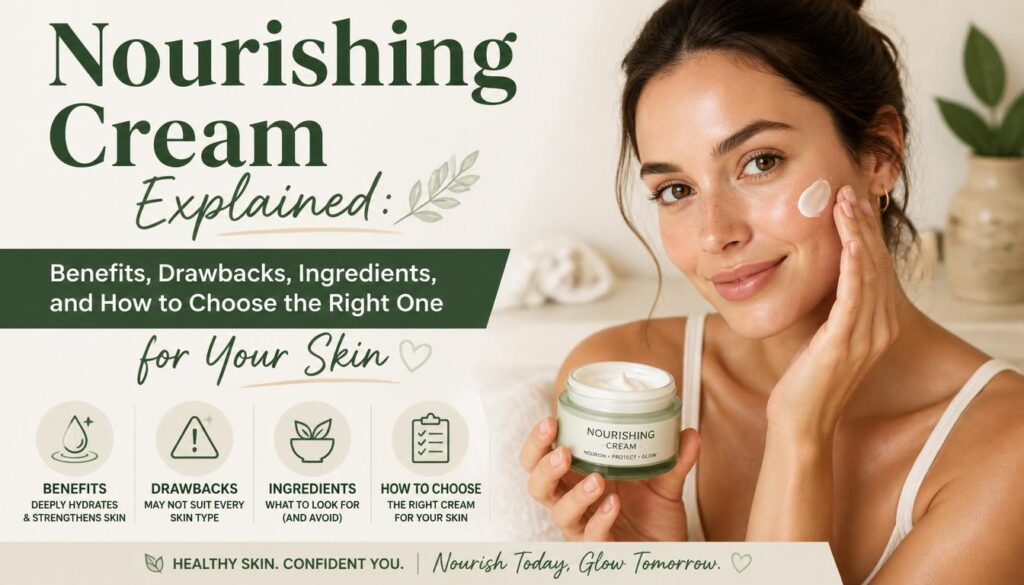
A nourishing cream is a rich skincare moisturizer designed to hydrate, strengthen the skin barrier, replenish essential lipids, and support healthier-looking skin. Nourishing creams are especially beneficial for dry, sensitive, mature, and dehydrated skin because they help lock in moisture, reduce moisture loss, improve skin softness, and support skin repair. However, some formulations may feel too heavy for oily or acne-prone skin and may contain ingredients that can cause irritation in sensitive individuals.
Introduction
Healthy skin depends on more than cleansing and exfoliation. One of the most important steps in any skincare routine is replenishing moisture and protecting the skin barrier. This is where nourishing creams play a critical role.
As skincare trends shift from aggressive treatments toward skin barrier repair, hydration, and skin longevity, nourishing creams have become essential products for millions of Americans seeking healthier, stronger, and more resilient skin.
Unlike lightweight lotions or gels, nourishing creams are formulated to deliver deeper hydration and provide long-lasting moisture support. They often contain emollients, humectants, antioxidants, vitamins, peptides, ceramides, botanical extracts, and skin-replenishing lipids that work together to support skin health.
Consumers frequently ask whether nourishing creams are worth using, who should use them, and whether there are any disadvantages. The answer depends on skin type, ingredient selection, environmental factors, and individual skincare goals.
This comprehensive guide explores everything you need to know about nourishing creams, including their benefits, drawbacks, key ingredients, ideal users, application methods, and how they fit into a modern anti-aging skincare routine.
What Is a Nourishing Cream?
A nourishing cream is a moisturizer specifically formulated to:
- Deliver long-lasting hydration
- Strengthen the skin barrier
- Improve skin comfort
- Replenish moisture loss
- Support skin repair
- Enhance softness and smoothness
Compared to lightweight moisturizers, nourishing creams typically contain higher concentrations of moisturizing and barrier-supportive ingredients.
They are especially popular among individuals with:
- Dry skin
- Sensitive skin
- Mature skin
- Dehydrated skin
- Compromised skin barriers
Why Hydration Is Essential for Healthy Skin
The skin barrier serves as the body’s first line of defense against environmental stressors.
When hydration levels decline, skin may become:
- Rough
- Tight
- Dull
- Irritated
- More prone to fine lines
Proper hydration supports:
- Elasticity
- Barrier function
- Skin repair
- Healthy aging
Nourishing creams help address these concerns by replenishing moisture and reducing transepidermal water loss (TEWL).
How Nourishing Creams Work
Nourishing creams typically combine three categories of moisturizing ingredients:
Humectants
Humectants attract water to the skin.
Examples include:
- Hyaluronic acid
- Glycerin
- Sodium PCA
- Aloe vera
Benefits:
- Improved hydration
- Plumper appearance
- Enhanced skin comfort
Emollients
Emollients smooth and soften the skin surface.
Examples include:
- Squalane
- Jojoba oil
- Shea butter
- Fatty acids
Benefits:
- Softer skin
- Reduced roughness
- Improved texture
Occlusives
Occlusives create a protective barrier that helps prevent moisture loss.
Examples include:
- Beeswax
- Petrolatum
- Dimethicone
- Lanolin
Benefits:
- Long-lasting hydration
- Barrier support
- Protection from dryness
Key Benefits of Nourishing Creams
1. Deep Hydration
One of the most obvious benefits is enhanced moisture retention.
Hydrated skin often appears:
- Smoother
- More radiant
- Healthier
- More youthful
2. Strengthens the Skin Barrier
A compromised skin barrier can lead to:
- Redness
- Sensitivity
- Dryness
- Irritation
Many nourishing creams contain ingredients that help repair and reinforce the barrier.
Examples include:
- Ceramides
- Cholesterol
- Fatty acids
3. Reduces the Appearance of Fine Lines
Dehydrated skin often makes wrinkles appear more noticeable.
Improved hydration can help:
- Plump the skin
- Smooth texture
- Reduce the appearance of fine lines
4. Supports Skin Recovery
Nourishing creams can be beneficial after:
- Exfoliation
- Chemical peels
- Retinoid use
- Environmental exposure
They help calm and restore the skin.
5. Improves Skin Texture
Regular use may result in:
- Softer skin
- Reduced flakiness
- Better smoothness
- Enhanced comfort
6. Supports Healthy Aging
Modern anti-aging skincare focuses heavily on maintaining hydration and barrier health.
Nourishing creams support:
- Skin longevity
- Collagen-friendly environments
- Resilience against environmental stress
Common Ingredients Found in Nourishing Creams
Ceramides
Benefits:
- Barrier repair
- Moisture retention
- Reduced sensitivity
Hyaluronic Acid
Benefits:
- Hydration
- Improved elasticity
- Skin plumping
Peptides
Benefits:
- Support collagen production
- Improve firmness
- Enhance skin resilience
Niacinamide
Benefits:
- Barrier strengthening
- Improved skin tone
- Reduced redness
Shea Butter
Benefits:
- Deep nourishment
- Skin softness
- Moisture retention
Squalane
Benefits:
- Lightweight hydration
- Skin protection
- Improved softness
Vitamin E
Benefits:
- Antioxidant protection
- Moisture support
- Skin conditioning
Who Should Use a Nourishing Cream?
Dry Skin
Ideal for restoring moisture and reducing tightness.
Mature Skin
Helps address:
- Fine lines
- Elasticity concerns
- Dryness
Sensitive Skin
Barrier-supportive ingredients often improve skin comfort.
Dehydrated Skin
Provides hydration regardless of skin type.
Potential Drawbacks of Nourishing Creams
While nourishing creams offer numerous benefits, they are not perfect for everyone.
1. May Feel Too Heavy
Individuals with oily skin may find some nourishing creams:
- Greasy
- Thick
- Heavy
This is particularly common in humid climates.
2. Potential for Breakouts
Some formulations contain highly occlusive ingredients that may contribute to congestion in acne-prone skin.
This varies by individual.
3. Ingredient Sensitivities
Certain ingredients may trigger irritation in susceptible individuals.
Examples include:
- Fragrances
- Essential oils
- Preservatives
Patch testing is recommended.
4. Cost Considerations
Premium nourishing creams often contain advanced ingredients and may be more expensive than basic moisturizers.
5. Not Always Necessary for Oily Skin
Individuals with naturally oily skin may achieve sufficient hydration from lighter formulations.
Nourishing Cream vs Moisturizer
Many consumers wonder whether nourishing creams and moisturizers are the same.
Standard Moisturizer
Typically:
- Lightweight
- Fast absorbing
- Suitable for normal to oily skin
Nourishing Cream
Typically:
- Richer texture
- Barrier-supportive
- Better for dry or mature skin
Nourishing Cream vs Night Cream
Nourishing Cream
Can be used:
- Morning
- Evening
Night Cream
Often contains:
- Heavier textures
- Active ingredients for overnight repair
Some products function as both.
How to Use a Nourishing Cream Correctly
Morning Application
- Cleanser
- Serum
- Nourishing cream
- Sunscreen
Evening Application
- Cleanser
- Treatment serum
- Nourishing cream
Nourishing Cream and Skin Longevity
The skincare industry increasingly emphasizes skin longevity.
Skin longevity focuses on:
- Prevention
- Barrier health
- Cellular support
- Long-term resilience
Nourishing creams play a significant role by maintaining hydration and supporting healthy skin function.
Common Mistakes to Avoid
Using Too Much Product
Excess product does not necessarily improve results.
Skipping Sunscreen
Hydration alone cannot protect against UV damage.
Ignoring Ingredient Lists
Choose formulations appropriate for your skin type.
Expecting Overnight Results
Healthy skin improvements require consistency.
How to Choose the Best Nourishing Cream
Look for:
Hydration
- Hyaluronic acid
- Glycerin
Barrier Support
- Ceramides
- Fatty acids
Anti-Aging Support
- Peptides
- Niacinamide
- Antioxidants
Sensitive Skin Considerations
- Fragrance-free formulas
- Dermatologist-tested products
Frequently Asked Questions
Is a nourishing cream good for aging skin?
Yes. Nourishing creams help support hydration, elasticity, and barrier health.
Can oily skin use a nourishing cream?
Some lighter nourishing creams may work well, but heavy formulations may feel greasy.
Are nourishing creams anti-aging?
While not a replacement for active treatments, they support healthy aging by improving hydration and barrier function.
Should I use nourishing cream every day?
Most people benefit from daily use.
Can nourishing creams help sensitive skin?
Many barrier-supportive formulations are ideal for sensitive skin.
What’s the difference between hydration and nourishment?
Hydration refers to water content, while nourishment involves replenishing lipids, vitamins, and skin-supportive ingredients.
E-E-A-T Signals (Expertise, Experience, Authoritativeness, Trustworthiness)
This article is based on established dermatological principles regarding:
- Skin barrier function
- Moisture retention
- Ceramide science
- Anti-aging skincare
- Sensitive skin care
- Hydration mechanisms
Readers should consult a board-certified dermatologist for persistent skin conditions or personalized skincare recommendations.
Internal Linking Suggestions
Link this article to:
- Benefits of Niacinamide for Skin
- Hydrating Pumpkin Mask Guide
- Clarifying Mask Benefits
- Age Defense Regimen for Dry Skin
- Peptides and Collagen Support
- How to Repair a Damaged Skin Barrier
- Hyaluronic Acid Benefits Explained
- Anti-Aging Skincare Routine Guide
Conclusion
A nourishing cream is much more than a basic moisturizer. It serves as a critical component of a healthy skincare routine by providing hydration, strengthening the skin barrier, supporting recovery, and helping maintain a youthful-looking complexion.
For individuals with dry, sensitive, mature, or dehydrated skin, the benefits often outweigh the drawbacks. However, choosing the right formulation for your specific skin type is essential to achieving optimal results.
By understanding both the merits and limitations of nourishing creams, consumers can make informed skincare decisions that support long-term skin health and skin longevity.
Ready to Upgrade Your Skincare Routine?
Choose a nourishing cream formulated with ceramides, peptides, antioxidants, and hydrating ingredients to help restore moisture, strengthen your skin barrier, and reveal smoother, healthier, and more radiant skin every day. Consistent hydration is one of the most effective investments you can make in your skin’s future.