In the digital age, health and wellness have gone mobile. From tracking sleep and steps to managing chronic conditions, digital health apps have surged in popularity across the United States. According to industry data, millions of Americans now use mobile health applications to monitor their well-being, improve fitness, manage medication, and communicate with providers.
But with thousands of apps available, a key question remains: Are digital health apps worth your time — and can they truly improve health outcomes?
This guide explores the rise of digital health apps, what science says about their benefits and limitations, and how to choose reliable tools that support your personal health journey.
What Are Digital Health Apps?
Digital health apps are mobile or web-based applications designed to help users manage different aspects of health and wellness. They fall into several categories, including:
- Fitness & Activity Tracking — step counters, workout logs
- Nutrition & Weight Management — food trackers, meal planners
- Mental Health Support — meditation, mood trackers
- Chronic Disease Management — diabetes, hypertension monitoring
- Telehealth & Virtual Care — doctor consult apps
- Medication Reminders & Sleep Helpers
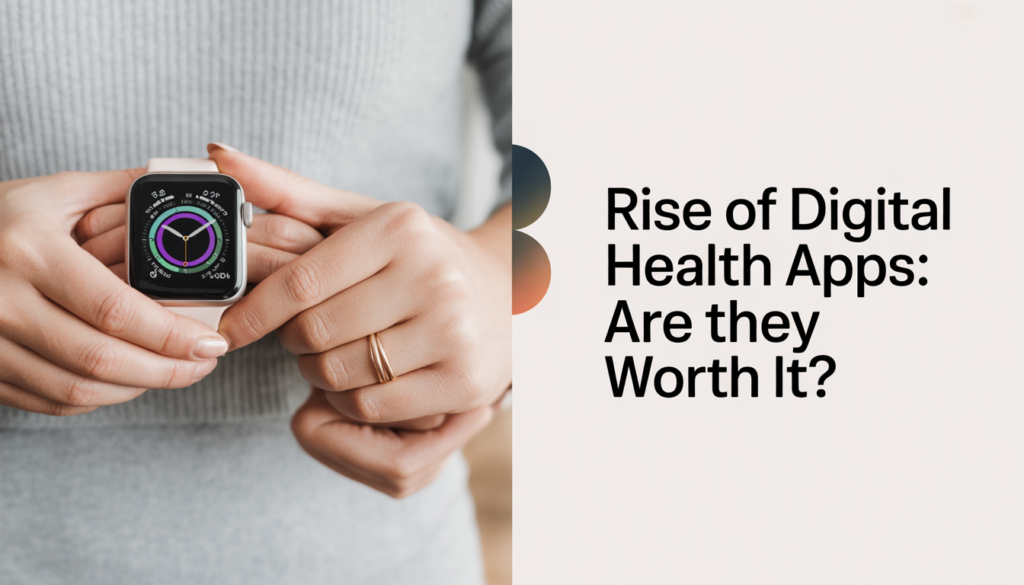
Some apps connect with wearable devices, like smartwatches, to provide real-time health data.
Why Digital Health Apps Have Exploded in Popularity
Several factors have driven their rise:
📱 Widespread smartphone use – Almost 85% of U.S. adults own a smartphone.
🩺 Demand for convenient care – People want health tools that fit busy lifestyles.
📈 Rise of telehealth – Apps supplement virtual care and reduce clinic visits.
💡 Self-tracking culture – Gamification and progress visuals motivate behavior change.
🌍 COVID-19 pandemic – Accelerated adoption of digital health services.
Today’s apps are designed for both healthy individuals and people managing chronic conditions.
What Science Says: Benefits of Digital Health Apps
🧠 1. Better Self-Awareness and Behavior Change
Studies show that tracking health behaviors increases awareness and motivation. Apps that monitor activity, nutrition, or sleep help users identify patterns and adjust habits accordingly.
For example:
- People who track steps tend to walk more.
- Food logging is linked to better weight outcomes.
Accountability matters.
❤️ 2. Support for Chronic Disease Management
Digital tools have shown promise in managing conditions like:
- Type 2 diabetes (glucose tracking, medication logs)
- Hypertension (blood pressure diaries)
- Asthma (symptom tracking)
Some apps communicate data to clinicians, improving disease control and reducing hospital visits.
🧑⚕️ 3. Enhanced Access to Care
Apps that integrate telehealth and digital communication reduce barriers to care. Patients can:
- Message providers
- Schedule visits
- Share health metrics
without unnecessary in-person trips.
This is especially valuable in rural or underserved areas.
🧘♀️ 4. Mental Well-Being Support
Meditation and mindfulness apps are widely studied. Evidence suggests they can:
- Reduce stress
- Improve sleep quality
- Enhance emotional resilience
These tools provide accessible mental health support between therapy sessions.
Limitations: What Health Apps Can’t Do
While digital health apps offer advantages, they aren’t a cure-all:
⚠️ 1. Not a Medical Diagnosis
Most apps are educational or supportive — not diagnostic tools. They do not replace professional medical evaluation.
⚠️ 2. Accuracy Varies
Not all apps use evidence-based algorithms or clinically validated measurements. Data from wearables can be helpful but may be imprecise.
⚠️ 3. Engagement Drops Over Time
Many users download health apps with good intentions but stop using them after a few weeks.
Consistency is key—but adherence can be a challenge.
⚠️ 4. Privacy and Data Security Concerns
Health data is sensitive. Not every app has strong security policies or transparent data use terms.
Before using an app, check its privacy policy and how your data may be shared.
How to Choose a Good Digital Health App
Here are evidence-based criteria to evaluate whether a health app is worth using:
✔ 1. Evidence of Clinical Validation
Choose apps backed by research or medical organizations.
✔ 2. Clear Privacy & Data Policies
Data ownership and encryption standards should be transparent.
✔ 3. Usability & User Engagement
Look for simple interfaces and features that fit your lifestyle.
✔ 4. Integration With Providers
Apps that share data with your healthcare provider can enhance care.
✔ 5. Regular Updates & Support
Active development means better security and evolving features.
Practical Examples of Digital Health Apps
Here are popular categories that many Americans find useful (brand examples excluded for neutrality):
- Step and activity monitoring for physical fitness
- Food and hydration logs for balanced nutrition
- Sleep tracking and sleep hygiene guidance
- Meditation and stress management programs
- Blood glucose or blood pressure tracking apps
- Telehealth platforms for remote consultations
Selecting the right tool should be personalized based on your health goals.
A Balanced Approach: Digital Tools + Traditional Healthcare
Digital health apps are most effective when used alongside—not instead of—professional medical care. For example:
✔ Track activity trends but consult a doctor for new symptoms.
✔ Log medication adherence and share data with your clinician.
✔ Use mindfulness apps for stress support, not as a substitute for counseling when needed.
Think of apps as partners in preventive care—not replacements for clinical evaluation.
Real User Behavior: What Works Best
Successful users tend to:
- Set specific, measurable goals
- Track consistently (daily or weekly)
- Review data trends periodically
- Adjust routines based on patterns
- Share progress with providers (when relevant)
Building habits around tracking increases the likelihood of long-term health gains.
Are Digital Health Apps Worth It?
Yes — when used thoughtfully.
They are:
✔ Useful for self-monitoring
✔ Helpful for preventive health behaviors
✔ Valuable when integrated with traditional care
✔ Motivational and supportive
But they are not:
❌ A medical diagnosis tool
❌ A stand-alone substitute for care
❌ Infallible or uniformly accurate
In an era where personal health is increasingly self-directed, informed tools—used consistently and thoughtfully—can help you live better, longer, and with greater awareness.
The rise of digital health apps isn’t just a trend—it’s part of the evolution of healthcare.
Used well, they’re worth it.