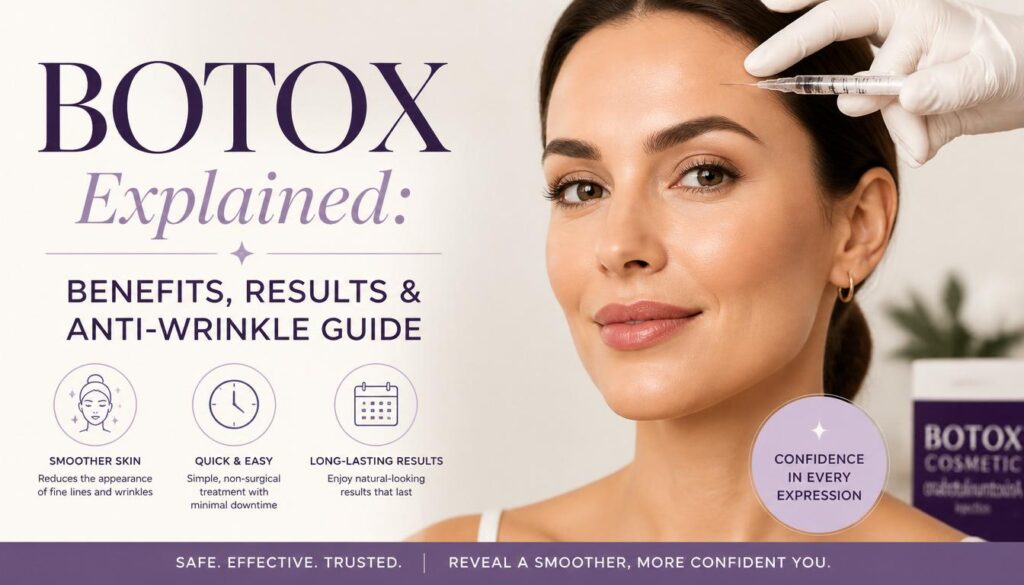
Learn how Botox anti-wrinkle injections work, benefits, treatment areas, results, risks, recovery, costs, and expert skincare tips.
What Are Anti-Wrinkle Injections (Botox)?
Anti-wrinkle injections, commonly known as Botox, are non-surgical cosmetic treatments that temporarily relax specific facial muscles responsible for dynamic wrinkles. By reducing repeated muscle movement, Botox helps soften the appearance of forehead lines, frown lines, and crow’s feet. Results typically become visible within several days and may last approximately 3 to 4 months, although individual results vary. Treatments should only be administered by qualified medical professionals.
Introduction
The demand for non-surgical cosmetic procedures continues to grow across the United States. Among all aesthetic treatments available today, anti-wrinkle injections—commonly referred to as Botox—remain one of the most popular options for individuals seeking a smoother, more refreshed appearance without surgery.
Many people begin noticing fine lines and wrinkles during their late twenties and thirties. Over time, repetitive facial expressions such as smiling, frowning, squinting, and raising the eyebrows contribute to the formation of dynamic wrinkles. As collagen production gradually decreases with age, these expression lines can become more noticeable.
Botox has become a leading solution because it offers a minimally invasive approach to reducing visible facial wrinkles while maintaining a natural appearance when administered properly.
This comprehensive guide explains everything U.S. consumers should know about Botox, including how it works, treatment areas, benefits, risks, recovery, costs, and realistic expectations.
What Is Botox?
Botox is a prescription injectable treatment derived from botulinum toxin type A. In cosmetic dermatology and aesthetic medicine, carefully controlled doses are injected into specific facial muscles to temporarily reduce muscle activity.
The treatment is FDA-approved for several cosmetic and medical uses.
Cosmetic applications primarily focus on reducing the appearance of:
- Forehead lines
- Glabellar lines (frown lines or “11 lines”)
- Crow’s feet around the eyes
Botox is one brand of botulinum toxin treatment. Other FDA-approved alternatives include:
- Dysport
- Xeomin
- Jeuveau
- Daxxify
While these products work similarly, treatment plans vary based on individual anatomy and provider recommendations.
How Botox Works
Understanding Dynamic Wrinkles
Dynamic wrinkles form due to repeated facial muscle contractions.
Examples include:
- Smiling
- Frowning
- Squinting
- Raising eyebrows
Over years of repetitive movement, these lines become more visible.
Temporary Muscle Relaxation
Botox temporarily blocks nerve signals that tell specific muscles to contract.
As muscle activity decreases:
- Wrinkles appear softer
- Skin looks smoother
- New lines may develop more slowly
Why Results Are Temporary
The body gradually restores nerve communication over time.
This is why maintenance treatments are typically required.
Common Treatment Areas
Forehead Lines
Horizontal lines caused by raising the eyebrows.
Glabellar Lines
Vertical “11” lines between the eyebrows.
Crow’s Feet
Fine lines around the outer corners of the eyes.
Bunny Lines
Wrinkles appearing on the bridge of the nose.
Lip Flip
Small injections around the upper lip to subtly enhance lip appearance.
Chin Dimpling
Treatment may soften an uneven or dimpled chin appearance.
Jawline Slimming
Certain patients may receive injections in enlarged masseter muscles.
Benefits of Anti-Wrinkle Injections
Non-Surgical Treatment
No incisions or general anesthesia.
Minimal Downtime
Most patients return to daily activities immediately.
Quick Procedure
Appointments often take 10–20 minutes.
Natural-Looking Results
When performed properly, facial expression remains natural.
Preventative Benefits
Early treatment may help slow wrinkle formation.
Customizable Treatment
Providers can personalize treatment based on facial anatomy.
Botox vs Dermal Fillers
| Botox | Dermal Fillers |
|---|---|
| Relaxes muscles | Adds volume |
| Treats dynamic wrinkles | Treats volume loss |
| Forehead lines | Cheeks and lips |
| Crow’s feet | Nasolabial folds |
| Frown lines | Facial contouring |
| Results 3–4 months | Results often last longer |
Many patients combine both treatments.
Who Is a Good Candidate?
Ideal candidates often include:
- Adults seeking wrinkle reduction
- Individuals with dynamic facial lines
- People wanting non-surgical facial rejuvenation
- Patients with realistic expectations
A qualified medical provider should determine candidacy.
The Botox Procedure Step-by-Step
Consultation
The provider evaluates:
- Facial anatomy
- Medical history
- Goals
- Existing wrinkles
Treatment Planning
Injection sites are marked based on facial movement.
Injection Process
A very fine needle delivers small amounts of product into targeted muscles.
Completion
Most treatments finish within minutes.
Recovery and Aftercare
Patients are commonly advised to:
Remain Upright
Avoid lying down immediately after treatment.
Avoid Excessive Exercise
Follow provider recommendations.
Avoid Rubbing Treatment Areas
This helps prevent unintended product migration.
Follow Provider Instructions
Individual recommendations vary.
Results Timeline
Day 1–3
Little visible change.
Day 4–7
Early improvements begin.
Day 10–14
Full results often become visible.
Month 3–4
Effects gradually diminish.
How Long Does Botox Last?
Results vary based on:
- Metabolism
- Treatment area
- Dosage
- Muscle strength
- Individual response
Many patients schedule maintenance treatments approximately every 3–4 months.
Risks and Side Effects
Most side effects are temporary and mild.
Possible side effects include:
- Redness
- Swelling
- Bruising
- Tenderness
- Headache
Rare complications can occur.
Always seek treatment from a licensed medical professional.
Preventative Botox Explained
A growing trend among younger adults is preventative Botox.
The concept involves treating facial muscles before wrinkles become deeply established.
The goal is wrinkle prevention rather than correction.
Results vary between individuals.
Botox for Men
Male cosmetic procedures continue to increase across the United States.
Men commonly seek treatment for:
- Forehead wrinkles
- Frown lines
- Crow’s feet
- Professional appearance concerns
Treatment plans are adjusted to preserve masculine facial characteristics.
The Role of Skincare Alongside Botox
Botox works best when combined with a comprehensive skincare routine.
Recommended products include:
Sunscreen
Broad-spectrum SPF 30+ daily.
Retinoids
Support skin renewal.
Peptides
Help support healthy-aging routines.
Antioxidants
Vitamin C helps defend against environmental stressors.
Hydrating Serums
Support moisture retention.
Botox Myths vs Facts
Myth: Botox freezes your face.
Fact: Proper treatment aims to preserve natural expression.
Myth: Botox is only for older adults.
Fact: Adults of various ages seek treatment.
Myth: Botox permanently removes wrinkles.
Fact: Results are temporary.
Myth: Results are immediate.
Fact: Full results typically take several days.
Myth: Botox replaces skincare.
Fact: Skincare remains essential.
Frequently Asked Questions
Is Botox safe?
Botox has been extensively studied and is FDA-approved for multiple cosmetic and medical indications when administered by qualified professionals.
How painful is Botox?
Most patients describe treatment as a brief pinching sensation.
How much does Botox cost?
Costs vary by region, provider experience, and treatment area.
Can Botox prevent wrinkles?
Botox may help reduce repetitive muscle movement associated with wrinkle formation.
What age should someone start Botox?
There is no universal age. Treatment decisions should be individualized.
Can Botox look natural?
Yes. Experienced providers typically focus on natural-looking results.
How often is Botox needed?
Many patients receive treatments every 3–4 months.
Can Botox be combined with fillers?
Yes. Many treatment plans combine both procedures.
Conclusion
Anti-wrinkle injections such as Botox have transformed modern aesthetic medicine by providing a non-surgical option for reducing dynamic facial wrinkles. By temporarily relaxing targeted muscles, Botox can soften forehead lines, crow’s feet, and frown lines while helping patients maintain a refreshed and natural appearance.
Although Botox is one of the most popular cosmetic procedures in the United States, the best outcomes come from realistic expectations, qualified medical providers, and a comprehensive skincare routine that includes sunscreen, hydration, antioxidants, and healthy-aging ingredients.
Botox is not a permanent solution, but when incorporated into a personalized treatment plan, it can be an effective tool for maintaining smoother, younger-looking skin.
Ready to Build a Complete Healthy-Aging Strategy?
Combine professional anti-wrinkle treatments with dermatologist-recommended skincare, daily SPF protection, hydration-focused products, antioxidants, and collagen-supporting ingredients to achieve healthier, more radiant-looking skin year-round. Consult a qualified aesthetic professional to determine the treatment plan that best matches your goals and skin needs.