
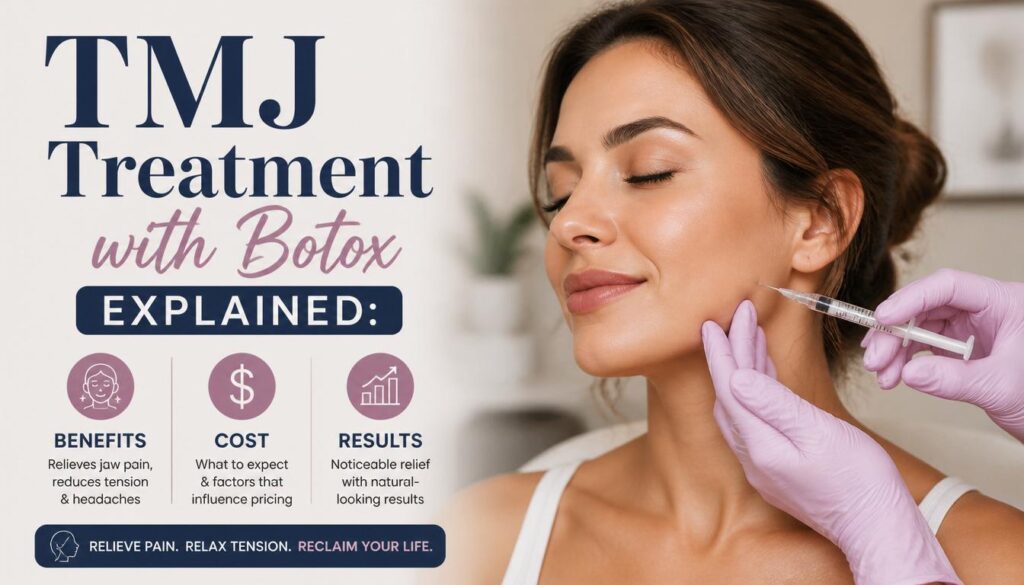
Discover how Botox treats TMJ pain, jaw tension, headaches, and teeth grinding. Learn benefits, costs, risks, recovery, and FAQs.
What is TMJ Treatment with Botox?
TMJ treatment with Botox is a minimally invasive procedure that involves injecting botulinum toxin into overactive jaw muscles to reduce muscle tension, relieve pain, decrease teeth grinding (bruxism), and improve jaw function. Relief typically begins within one to two weeks and lasts approximately three to four months.
Botox treatment for temporomandibular joint (TMJ) disorders involves injecting botulinum toxin into the masseter and temporalis muscles to relieve pain, reduce teeth grinding, and relax overactive jaw muscles. The procedure takes under 30 minutes, provides relief within one to two weeks, and typically lasts for 3 to 4 months before requiring repeat sessions.
TMJ Treatment with Botox Explained: Benefits, Procedure, Cost, Risks & Recovery
Introduction
- Understanding TMJ disorders
- Why TMJ affects millions of Americans
- Growing popularity of Botox
- FDA considerations
- When Botox is recommended
What is TMJ?
Cover
- Anatomy
- Temporomandibular joint
- Jaw movement
- Why inflammation occurs
Common Symptoms
Include
- Jaw pain
- Clicking
- Popping
- Locked jaw
- Neck pain
- Headaches
- Earaches
- Facial pain
- Teeth grinding
- Jaw fatigue
Causes of TMJ Disorders
- Discuss
- Stress
- Bruxism
- Arthritis
- Injury
- Poor bite
- Sleep disorders
- Inflammation
- Muscle overuse
How Botox Works for TMJ
- Botulinum toxin
- Masseter muscle
- Temporalis muscle
- Muscle relaxation
- Pain reduction
- Reduced jaw clenching
- Less inflammation
- Improved movement
Botox Injection Procedure
- Consultation
- Medical history
- Diagnosis
- Injection locations
- Treatment duration
- Pain level
- Aftercare
- Number of injections
Benefits of Botox for TMJ
- Pain relief
- Reduced headaches
- Less teeth grinding
- Better sleep
- Improved jaw mobility
- Less muscle tension
- Reduced facial pain
- Minimally invasive
- Quick recovery
- No surgery
Before and After Treatment
- Timeline
- Day 1
- Week 1
- Week 2
- Month 1
- Month 3
- Maintenance schedule
Who Is a Good Candidate?
- Chronic jaw pain
- Bruxism
- Jaw clenching
- Migraines
- Muscle hypertrophy
- Failed conservative treatment
Who Should Avoid Botox?
- Pregnancy
- Neuromuscular disorders
- Certain medications
- Active infection
- Botox allergy
Possible Side Effects
- Temporary soreness
- Bruising
- Chewing weakness
- Smile asymmetry
- Dry mouth
- Headache
- Rare complications
Botox vs Traditional TMJ Treatments
- Comparison table
- Botox
- Night guards
- Physical therapy
- Muscle relaxants
- Surgery
- Lifestyle modification
How Long Does Botox Last?
- Average duration
- Maintenance schedule
- Factors affecting longevity
Botox Cost in the USA
- Average
- $300–$1,200+
- Insurance coverage
- Medical necessity
- Out-of-pocket costs
- Factors affecting pricing
Recovery Tips
- Avoid rubbing
- No strenuous exercise
- Soft foods
- Stay hydrated
- Stress management
- Jaw exercises
Is Botox FDA Approved for TMJ?
- Current approval status
- Off-label use
- Professional recommendations
- Importance of experienced providers
Choosing the Right Provider
- Dentist
- Oral surgeon
- Facial pain specialist
- Dermatologist
- Plastic surgeon
- Credentials
- Experience
- Patient reviews
Frequently Asked Questions
Does Botox permanently cure TMJ?
No. Botox provides temporary symptom relief by relaxing overactive jaw muscles. Most patients require repeat treatments every three to four months.
How painful are Botox injections for TMJ?
Most patients report only mild discomfort. The procedure takes about 10–20 minutes with minimal downtime.
Can Botox stop teeth grinding?
Botox can significantly reduce the force of teeth grinding and jaw clenching but may not eliminate the habit entirely.
How soon will I feel relief?
Most people begin noticing improvement within 3–7 days, with maximum benefit occurring after approximately two weeks.
Will Botox make my face slimmer?
Some patients experience mild facial slimming due to relaxation of enlarged masseter muscles, especially after repeated treatments.
Is Botox covered by insurance?
Coverage varies. Some insurance plans may provide reimbursement if Botox is deemed medically necessary, but many consider TMJ Botox an elective or off-label treatment.
How many units of Botox are used?
Treatment typically ranges from 20–60 units per side depending on symptom severity and muscle size.
Can Botox worsen TMJ?
When administered by an experienced provider, complications are uncommon. Incorrect placement or excessive dosing may temporarily affect chewing strength or facial symmetry.
Conclusion
Summarize:
- Botox is a minimally invasive option for managing TMJ-related pain, jaw tension, headaches, and bruxism.
- While it does not cure the underlying disorder, it can provide meaningful symptom relief and improve quality of life for many patients.
- The best outcomes come from a comprehensive evaluation by a qualified healthcare professional, who may recommend Botox alongside treatments such as a night guard, physical therapy, stress reduction, or bite correction.
Call to Action:
f you’re struggling with chronic jaw pain, frequent headaches, or persistent teeth grinding, schedule a consultation with a qualified TMJ specialist or dental professional. A personalized evaluation can help determine whether Botox is an appropriate option as part of your overall treatment plan.