Health advice is everywhere in modern America. Social media influencers, family traditions, celebrity wellness trends, and viral TikTok videos constantly tell people what they should eat, drink, avoid, or believe about their bodies.
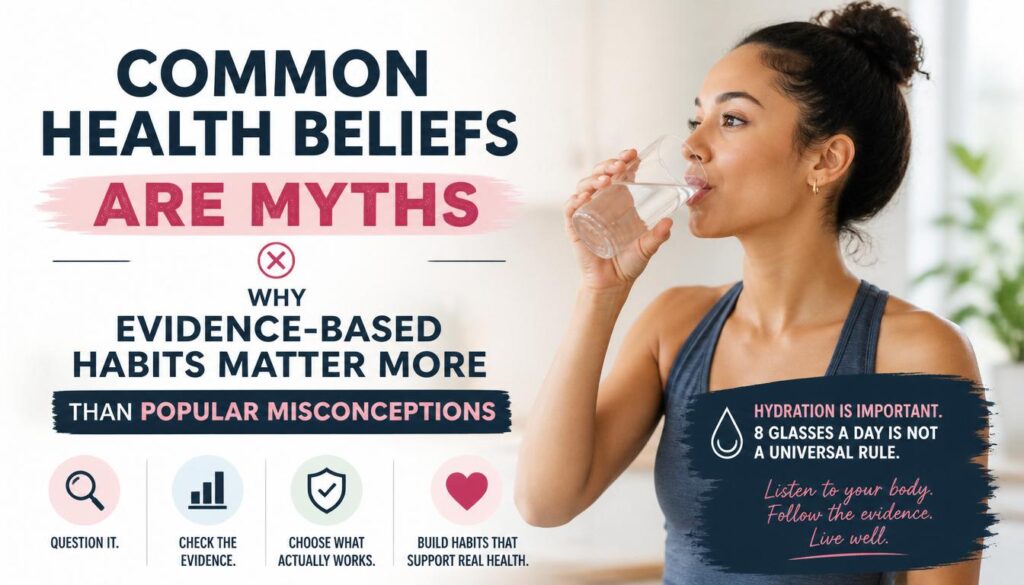
But many widely accepted health beliefs are actually myths.
For decades, Americans have been told:
- Everyone needs eight glasses of water daily
- Cold weather causes colds
- Antibiotics cure all infections
- Green mucus always means bacterial illness
- Sweating removes toxins
- More vitamins always improve health
The reality is far more complicated.
Scientific evidence shows that hydration needs vary by individual, colds are caused by viruses rather than cold temperatures, and antibiotics only work against bacterial infections — not viral illnesses like the common cold or flu. Experts increasingly warn that believing outdated health myths can lead to poor healthcare decisions, unnecessary medication use, and harmful lifestyle habits.
In this comprehensive guide, we’ll debunk common health misconceptions, explain what modern science actually says, and explore why evidence-based health habits are essential for long-term wellness.
Why Health Myths Continue to Spread
Health myths survive because they are:
- Repeated frequently
- Passed through generations
- Simplified versions of science
- Shared emotionally online
- Supported by marketing trends
Many myths sound believable because they contain partial truths. Others persist because people rely on anecdotal experiences instead of scientific evidence.
Unfortunately, misinformation can lead to:
- Delayed medical care
- Unnecessary antibiotic use
- Poor hydration habits
- Fear and anxiety
- Wasted money on ineffective remedies
According to experts from the CDC and major medical institutions, evidence-based healthcare decisions improve outcomes and reduce preventable health risks.
Myth 1: Everyone Needs Exactly Eight Glasses of Water Every Day
This is one of the most commonly repeated wellness myths in the United States.
The Truth
Hydration needs vary significantly between individuals.
Your daily water requirements depend on:
- Body size
- Activity level
- Climate
- Diet
- Health conditions
- Age
- Medications
There is no universal “one-size-fits-all” hydration rule.
Experts explain that much of your fluid intake also comes from:
- Fruits
- Vegetables
- Soups
- Tea
- Coffee
- Milk
Why the Myth Became Popular
Researchers believe the “8 glasses a day” rule likely evolved from misunderstood nutrition recommendations about total fluid intake, including fluids from food.
Better Signs of Proper Hydration
Instead of obsessing over exact numbers, monitor:
- Thirst
- Urine color
- Dry mouth
- Energy levels
- Dizziness
Reddit health discussions frequently mention that urine color is often a more practical hydration indicator than fixed water goals.
Can Drinking Too Much Water Be Harmful?
Yes.
Excessive water intake can occasionally contribute to electrolyte imbalances, especially during endurance activities.
Balance matters more than blindly forcing large amounts of water.
Myth 2: Cold Weather Causes Colds
Many Americans still believe that going outside with wet hair or without a jacket directly causes illness.
The Truth
Viruses cause colds — not cold temperatures.
The common cold is caused primarily by viral infections such as rhinoviruses. Experts from Johns Hopkins Medicine emphasize that cold air itself does not create viruses.
Why Illness Spreads More During Winter
People tend to get sick more often in colder months because:
- More time is spent indoors
- Viruses spread more easily in close spaces
- Dry indoor air affects nasal passages
- Some viruses survive longer in cool conditions
What About Wet Hair?
Going outside with wet hair does not directly cause:
- Colds
- Influenza
- Pneumonia
Those illnesses result from infections caused by viruses or bacteria.
Johns Hopkins experts specifically debunk the idea that wet hair causes colds or pneumonia.
Myth 3: Antibiotics Cure Viral Infections
This myth remains one of the most dangerous healthcare misconceptions.
The Truth
Antibiotics only treat bacterial infections.
They do NOT work against:
- Colds
- Flu
- COVID-19
- Most sore throats
- Viral bronchitis
The CDC clearly states that antibiotics are ineffective against viruses.
Why Antibiotic Overuse Is Dangerous
Using antibiotics unnecessarily contributes to:
- Antibiotic resistance
- Drug-resistant bacteria
- Digestive problems
- Allergic reactions
- Gut microbiome disruption
Experts warn that antibiotic resistance is becoming a major public health concern worldwide.
Why People Still Request Antibiotics
Many patients incorrectly assume antibiotics speed recovery from viral illnesses.
However, research consistently shows antibiotics provide no meaningful benefit for common viral colds.
Myth 4: Green or Yellow Mucus Always Means Bacterial Infection
The Truth
Mucus color alone does not reliably determine whether an infection is viral or bacterial.
According to Johns Hopkins Medicine, mucus color often reflects immune system activity and white blood cells — not necessarily bacterial infection.
What Actually Matters
Doctors evaluate:
- Symptom duration
- Fever severity
- Breathing issues
- Facial pain
- Overall symptom progression
Not just mucus color.
Myth 5: Sweating Removes Toxins From the Body
Detox culture has become extremely popular online.
The Truth
Sweat mainly regulates body temperature.
Your primary detoxification systems are:
- Liver
- Kidneys
- Lungs
- Digestive system
While small amounts of substances may appear in sweat, sweating itself is not a major detox mechanism.
Why Detox Marketing Is Misleading
Many detox products:
- Lack strong scientific evidence
- Promise unrealistic results
- Exploit health anxieties
Evidence-based wellness focuses on:
- Balanced nutrition
- Sleep
- Hydration
- Exercise
- Preventive care
Not miracle detoxes.
Myth 6: More Vitamins Always Improve Health
The Truth
More supplements do not automatically equal better health.
Excessive intake of certain vitamins can actually cause harm.
Potential risks include:
- Liver damage
- Kidney stones
- Toxicity
- Medication interactions
Food First Matters
Whole foods provide:
- Fiber
- Antioxidants
- Micronutrients
- Plant compounds
That supplements cannot fully replicate.
Supplements may help specific deficiencies, but they should not replace balanced nutrition.
Myth 7: “Feed a Cold, Starve a Fever”
This old saying has circulated for generations.
The Truth
Both colds and fevers require hydration and proper nutrition.
Johns Hopkins Medicine explains that illness can increase dehydration risk, making fluids especially important during sickness.
Better Advice During Illness
Focus on:
- Rest
- Hydration
- Nutritious foods
- Medical guidance if symptoms worsen
Starving yourself while sick may actually slow recovery.
Myth 8: If You’re Not Sweating, Your Workout Isn’t Effective
The Truth
Sweat does not measure workout quality.
Sweating depends on:
- Genetics
- Temperature
- Humidity
- Fitness level
Some highly effective workouts produce little sweat, especially in cooler environments.
What Actually Determines Fitness Progress
- Consistency
- Strength improvements
- Cardiovascular endurance
- Recovery
- Exercise intensity
Not simply how soaked your shirt becomes.
Myth 9: Natural Remedies Are Always Safe
Many Americans assume “natural” automatically means harmless.
The Truth
Natural products can still cause:
- Allergic reactions
- Drug interactions
- Side effects
- Toxicity
Examples include:
- Excessive herbal supplements
- Improper essential oil use
- Unsafe detox products
Even herbal remedies should be discussed with healthcare professionals.
Myth 10: You Should Finish Every Antibiotic Prescription No Matter What
This topic has evolved in recent years.
The Truth
Historically, patients were always told to finish antibiotics completely to prevent resistance.
Today, researchers recognize that optimal antibiotic duration may vary depending on:
- Infection type
- Severity
- Patient response
Reddit medical discussions frequently reference evolving antibiotic guidelines and shorter treatment durations for some conditions.
Important Reminder
Never stop prescribed antibiotics without speaking to your healthcare provider first.
Myth 11: Vitamin C Prevents All Colds
The Truth
Vitamin C is important for immune function, but evidence for preventing colds in the general population remains limited.
According to the National Center for Complementary and Integrative Health, vitamin C may slightly reduce cold duration in certain groups under heavy physical stress, but results are inconsistent for most people.
What Actually Supports Immune Health
- Sleep
- Balanced nutrition
- Stress management
- Exercise
- Vaccinations
- Hydration
There is no magical immunity shortcut.
Myth 12: Organic Means Chemical-Free
The Truth
Everything contains chemicals — including organic foods.
The term “organic” refers to specific agricultural practices, not the absence of chemicals.
Reddit discussions often highlight confusion surrounding the word “chemical-free.”
Important Perspective
Organic foods may offer certain benefits, but “organic” does not automatically mean:
- Healthier
- Safer
- More nutritious
Overall dietary quality matters more.
Why Evidence-Based Healthcare Matters
Evidence-based medicine combines:
- Scientific research
- Clinical expertise
- Patient-specific needs
This approach helps reduce:
- Medical misinformation
- Harmful trends
- Ineffective treatments
- Fear-based healthcare decisions
Reliable Health Information Usually Comes From
- Medical schools
- Government health agencies
- Licensed healthcare professionals
- Peer-reviewed research
- Major hospital systems
How Social Media Fuels Health Misinformation
Platforms like TikTok, YouTube, and Instagram have accelerated the spread of:
- Wellness myths
- Fake cures
- Detox trends
- Supplement misinformation
- Anti-science claims
Common Red Flags Online
Be cautious of:
- “Miracle cures”
- Extreme promises
- Fear-based marketing
- Celebrity-only endorsements
- Claims lacking scientific sources
Virality does not equal medical accuracy.
- Common health myths debunked
- Medical misconceptions
- Evidence-based medicine
- Wellness myths
- Antibiotic resistance
- Viral vs bacterial infections
- Hydration myths
- Health misinformation
- Immune system myths
- Popular health misconceptions
- Scientific health facts
- Cold and flu myths
- Preventive healthcare habits
- Modern health myths
- Health facts vs fiction
Evidence-Based Habits That Actually Improve Health
Instead of chasing viral trends, experts recommend focusing on proven habits.
Daily Health Habits Supported by Science
1. Prioritize Sleep
Poor sleep affects:
- Immunity
- Mood
- Heart health
- Metabolism
2. Eat Balanced Meals
Focus on:
- Fruits
- Vegetables
- Lean protein
- Whole grains
- Healthy fats
3. Stay Physically Active
Regular exercise supports:
- Heart health
- Mental wellness
- Longevity
- Blood sugar control
4. Use Antibiotics Responsibly
Only take antibiotics when medically appropriate.
5. Stay Hydrated Based on Individual Needs
Hydration is personal — not universal.
6. Get Preventive Healthcare
Routine screenings and vaccinations matter.
Why Americans Need Better Health Literacy
Health literacy helps people:
- Understand medical advice
- Evaluate online claims
- Make informed decisions
- Avoid misinformation
In today’s digital world, critical thinking is an essential healthcare skill.
Final Thoughts
Many common health beliefs are myths that continue to spread through social media, outdated advice, and cultural habits.
Scientific evidence clearly shows:
- Hydration needs vary by individual
- Colds are caused by viruses, not cold weather
- Antibiotics only treat bacterial infections
- Mucus color alone does not diagnose illness
- Detox trends are often misleading
The most effective path to long-term wellness is not trendy hacks or viral misinformation.
It’s evidence-based habits:
- Balanced nutrition
- Quality sleep
- Exercise
- Preventive care
- Responsible medication use
- Critical thinking about health claims
In an age of constant online health advice, science remains the most reliable foundation for making smart healthcare decisions.