For years, skincare culture celebrated the elaborate “10-step routine.” Double cleansing, layering acids, rotating masks, stacking serums, and chasing the newest active ingredient became the gold standard for glowing skin. But in 2026, the skincare industry is pivoting in a different direction: healthier skin barriers, minimalist routines, and long-term skin longevity.
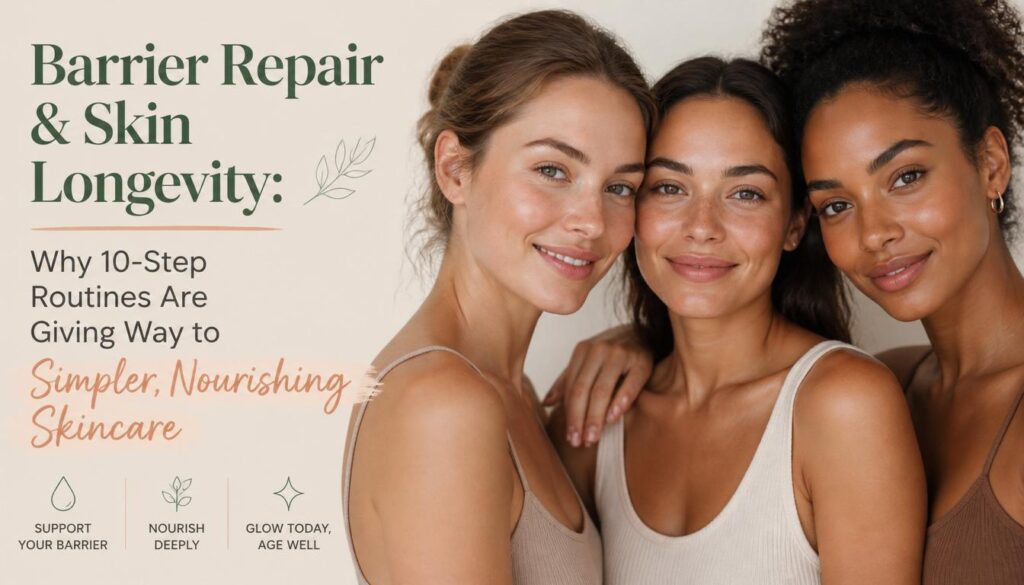
Today’s consumers are no longer asking, “How many products should I use?” Instead, they’re asking, “How can I keep my skin healthy for decades?”
Dermatologists, estheticians, and beauty brands are increasingly emphasizing skin resilience over aggressive treatments. The newest skincare philosophy focuses on strengthening the skin barrier, reducing inflammation, and using fewer—but smarter—products. According to beauty trend reports, science-backed ingredients like peptides, ceramides, retinoids, and gentle vitamin C formulas are replacing harsh exfoliation overload.
This shift reflects a broader movement toward “skin longevity”—the idea that skincare should support the skin’s health over time, not just deliver temporary glow or overnight transformations.
What Is the Skin Barrier—and Why Does It Matter?
Your skin barrier, also known as the stratum corneum, is the outermost layer of your skin. Think of it as your body’s protective shield. It locks in moisture while defending against pollutants, bacteria, UV damage, allergens, and irritation.
When your skin barrier is healthy, your complexion looks:
- Smooth
- Hydrated
- Calm
- Even-toned
- Resilient
When it’s damaged, however, you may notice:
- Dryness
- Tightness
- Redness
- Flaking
- Acne flare-ups
- Sensitivity
- Burning after applying products
Ironically, overdoing skincare is one of the fastest ways to damage your barrier. Excessive exfoliation, too many active ingredients, and harsh cleansers can strip the skin of essential lipids and proteins.
This is one reason why “less is more” skincare has become so popular across dermatology circles and online skincare communities. Many users report calmer, healthier skin after simplifying their routines.
The Rise of Skin Longevity
Skin longevity is the next evolution of anti-aging skincare.
Instead of trying to erase wrinkles overnight, skin longevity focuses on preserving the skin’s function, collagen production, hydration levels, and resilience over time.
The approach includes:
- Preventing inflammation
- Supporting collagen naturally
- Protecting the microbiome
- Minimizing environmental stress
- Encouraging cellular repair
- Maintaining consistent hydration
- Using clinically proven ingredients
Industry experts say consumers are increasingly prioritizing prevention over correction. Peptides, growth factors, and regenerative skincare technologies are becoming central to this movement.
This doesn’t mean people are abandoning active ingredients entirely. Instead, skincare routines are becoming more strategic and balanced.
Why 10-Step Skincare Routines Are Losing Popularity
The famous multi-step skincare routines popularized by K-beauty transformed the beauty industry. They introduced consumers to hydration layering, essences, gentle exfoliation, and SPF awareness.
But over time, many people started experiencing:
- Product fatigue
- Irritation
- Over-exfoliation
- Ingredient conflicts
- Increased sensitivity
- Breakouts from layering too much
Consumers also realized that consistency matters more than complexity.
A growing number of skincare enthusiasts now prefer routines built around just a few essentials:
- Gentle cleanser
- Moisturizer
- Sunscreen
- One targeted treatment
Reddit skincare discussions frequently highlight that simplified routines often improve skin barrier health and reduce inflammation.
This trend is often called:
- Skinimalism
- Minimalist skincare
- Barrier-first skincare
- Slow beauty
- Functional skincare
Signs Your Skincare Routine Is Too Complicated
Many people assume more products equal better skin. But your skin may actually perform worse when overloaded.
Here are warning signs your routine may be damaging your skin barrier:
1. Persistent Redness
If your skin looks constantly flushed or irritated, you may be overusing exfoliants or strong actives.
2. Tightness After Cleansing
Healthy skin should feel comfortable after washing—not squeaky clean.
3. Burning or Stinging
Products that suddenly sting may indicate a compromised barrier.
4. Increased Breakouts
Overusing acids and harsh ingredients can disrupt oil balance and trigger acne.
5. Flaking or Peeling
Peeling isn’t always a sign products are “working.” It may indicate irritation.
6. Products Stop Performing
Inflamed skin often becomes less responsive to treatment ingredients.
The Core Principles of Barrier Repair Skincare
Barrier repair skincare focuses on restoring and protecting the skin rather than aggressively treating it.
Here are the foundational principles.
1. Simplify Your Routine
You do not need 12 products twice a day.
Most dermatologists recommend focusing on:
- Cleanser
- Moisturizer
- Sunscreen
- One or two targeted actives
Consistency beats complexity.
2. Prioritize Hydration
Hydrated skin functions better and heals faster.
Look for ingredients like:
- Hyaluronic acid
- Glycerin
- Panthenol
- Squalane
- Aloe vera
Hydration also helps reduce irritation from active ingredients.
3. Rebuild Lipids With Ceramides
Ceramides are essential fats naturally found in the skin barrier.
They help prevent moisture loss and maintain barrier integrity.
Ceramide-rich moisturizers are now considered essential in modern skincare routines.
4. Reduce Over-Exfoliation
Daily exfoliation is no longer considered ideal for most skin types.
Experts now recommend gentler exfoliation only 1–2 times weekly.
5. Wear Sunscreen Every Day
SPF remains the single most important anti-aging and skin-protective product.
UV exposure accelerates:
- Collagen breakdown
- Hyperpigmentation
- Wrinkles
- Inflammation
- Barrier damage
No skin longevity routine works without daily sun protection.
Best Ingredients for Barrier Repair & Skin Longevity
Modern skincare is shifting toward ingredients backed by dermatological science rather than hype.
Here are the most effective categories.
Ceramides
Ceramides restore the skin barrier and reduce moisture loss.
Best for:
- Dry skin
- Sensitive skin
- Eczema-prone skin
- Barrier recovery
Peptides
Peptides are among the most talked-about skin longevity ingredients in 2026. Experts say they help support collagen production and skin resilience.
Benefits include:
- Improved firmness
- Reduced fine lines
- Better elasticity
- Smoother texture
Niacinamide
Niacinamide helps:
- Calm redness
- Strengthen barrier function
- Regulate oil
- Improve uneven skin tone
It’s especially popular because it works well for most skin types.
Retinal & Retinoids
Retinoids remain one of the most clinically proven anti-aging ingredients.
However, newer formulations focus on:
- Gentler delivery systems
- Reduced irritation
- Better tolerance
Modern skincare innovation is making retinoids more accessible for sensitive skin users.
Growth Factors
Growth factors are increasingly associated with regenerative skincare and collagen support.
While research is still evolving, experts believe they represent a major part of future skin longevity science.
Centella Asiatica
This calming botanical ingredient helps:
- Reduce redness
- Support healing
- Soothe irritation
- Strengthen compromised skin
Squalane
Squalane is lightweight, non-comedogenic, and excellent for moisture retention.
It’s ideal for:
- Dry skin
- Sensitive skin
- Mature skin
A Simple Barrier-Repair Routine That Actually Works
Here’s a dermatologist-inspired minimalist routine designed for long-term skin health.
Morning Routine
Step 1: Gentle Cleanser
Use a sulfate-free cleanser that removes dirt without stripping natural oils.
Step 2: Hydrating Serum
Apply a lightweight hydrating serum with hyaluronic acid or glycerin.
Step 3: Moisturizer
Choose a moisturizer with:
- Ceramides
- Peptides
- Niacinamide
Step 4: Sunscreen SPF 30+
Daily SPF is non-negotiable for skin longevity.
Evening Routine
Step 1: Gentle Cleanser
Avoid harsh foaming cleansers at night.
Step 2: Treatment Product
Alternate between:
- Retinoids
- Peptides
- Azelaic acid
- Barrier serums
Avoid stacking too many actives together.
Step 3: Barrier Cream
Use a richer moisturizer at night to support repair and hydration.
The Psychology Behind Simpler Skincare
Minimalist skincare isn’t just about skin health—it’s also about mental wellness.
Consumers are becoming exhausted by:
- Trend overload
- Endless product launches
- Conflicting advice
- “Perfect skin” pressure
Experts say skincare is evolving into a ritual centered on comfort, consistency, and self-care.
People want routines that:
- Feel calming
- Fit busy schedules
- Reduce stress
- Deliver sustainable results
This emotional shift is a major reason skinimalism continues to grow.
Skin Barrier Repair for Different Skin Types
Dry Skin
Focus on:
- Ceramides
- Rich creams
- Squalane
- Occlusive moisturizers
Avoid excessive exfoliation.
Oily Skin
Barrier repair matters for oily skin too.
Use:
- Lightweight moisturizers
- Niacinamide
- Gel creams
- Non-comedogenic hydration
Skipping moisturizer can worsen oil production.
Sensitive Skin
Stick to:
- Fragrance-free products
- Minimal actives
- Gentle formulations
Patch test new products carefully.
Acne-Prone Skin
Acne treatments can easily damage the skin barrier.
Balance active ingredients with:
- Hydration
- Barrier creams
- Recovery nights
The Future of Skincare Is Smarter, Not Bigger
The skincare industry is moving away from excessive routines and toward intelligent, science-backed simplicity.
Current beauty trends show growing interest in:
- Barrier repair
- Longevity-focused skincare
- Regenerative ingredients
- Personalized routines
- Microbiome health
- Gentle retinoid technology
- Peptides and growth factors
- Skin resilience
Even technology is evolving to support skin health monitoring, including AI-powered hydration and barrier analysis tools.
The future of skincare isn’t about owning more products—it’s about understanding your skin better.
Final Thoughts
Healthy skin doesn’t come from using the most products. It comes from using the right products consistently.
The era of aggressive, overcomplicated skincare is fading. In its place, consumers are embracing a more sustainable philosophy centered on barrier repair, nourishment, and long-term skin longevity.
This doesn’t mean skincare has become boring. Instead, it has become smarter.
Today’s best skincare routines prioritize:
- Prevention over correction
- Consistency over excess
- Recovery over irritation
- Science over hype
And perhaps the biggest beauty lesson of all?
Sometimes your skin thrives not when you add more—but when you finally give it less.