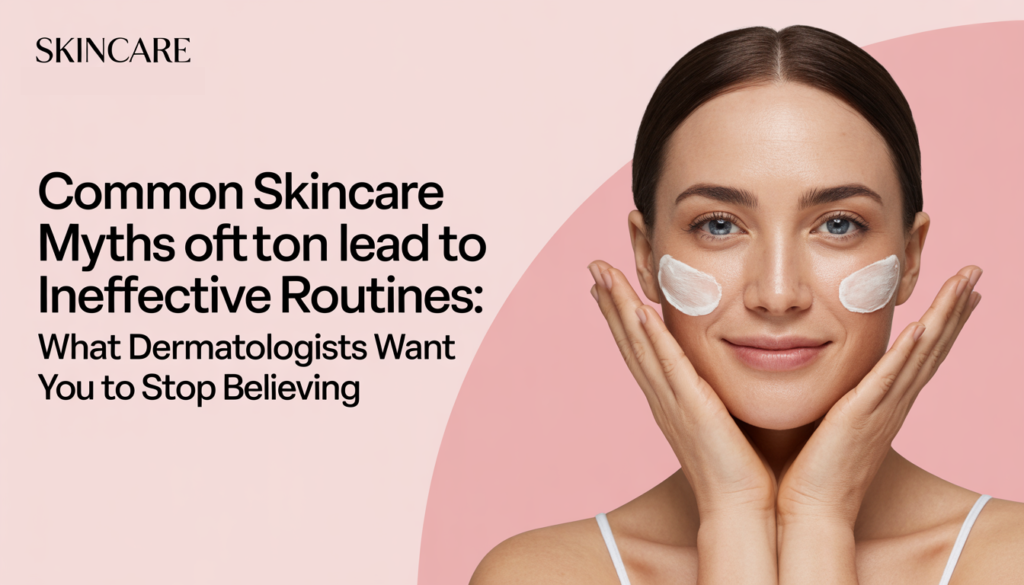
The skincare industry in the United States is booming. From TikTok beauty hacks to celebrity-approved “miracle” products, Americans are constantly exposed to skincare advice — but not all of it is accurate. In fact, many common skincare myths often lead to ineffective routines, wasted money, irritated skin, and long-term damage.
One person says oily skin doesn’t need moisturizer. Another claims natural ingredients are always safer. Social media influencers promote 10-step skincare routines while dermatologists often recommend simplicity and consistency instead.
So what’s true — and what’s fiction?
This guide breaks down the most common skincare myths, explains the science behind healthy skin, and helps you build a skincare routine that actually works for your skin type and lifestyle.
According to experts, evidence-based skincare focuses on three core principles:
- Protecting the skin barrier
- Preventing unnecessary irritation
- Using consistent, science-backed ingredients
Let’s separate skincare facts from fiction.
Why Skincare Myths Spread So Easily
Skincare misinformation spreads because beauty advice is everywhere:
- Social media trends
- Viral DIY hacks
- Influencer marketing
- Celebrity routines
- Unverified online articles
- Product advertising
Many skincare myths sound believable because they include partial truths. Others persist because skincare results vary from person to person.
Unfortunately, following bad advice can lead to:
- Acne flare-ups
- Skin barrier damage
- Dryness and irritation
- Hyperpigmentation
- Premature aging
- Sun damage
- Allergic reactions
Even respected sources like Harvard Health emphasize that many popular skincare beliefs are unsupported by science.
Myth 1: Oily Skin Doesn’t Need Moisturizer
Why People Believe It
Many people assume adding moisturizer to oily skin will make it greasier and cause more acne.
The Truth
Oily skin still needs hydration.
When skin becomes dehydrated, it may produce even more oil to compensate. Skipping moisturizer can actually worsen shine, clogged pores, and breakouts. Dermatologists consistently recommend lightweight, non-comedogenic moisturizers even for acne-prone skin.
What to Do Instead
Look for:
- Oil-free moisturizers
- Gel-based hydrators
- Non-comedogenic formulas
- Ingredients like hyaluronic acid or ceramides
Best Moisturizing Ingredients for Oily Skin
- Niacinamide
- Hyaluronic acid
- Glycerin
- Ceramides
- Squalane
Myth 2: You Only Need Sunscreen on Sunny Days
The Truth
UV rays penetrate:
- Clouds
- Windows
- Car windshields
- Indoor lighting exposure near windows
Daily sunscreen is one of the most important anti-aging and skin cancer prevention habits. Experts recommend broad-spectrum SPF 30 or higher every single day.
Why This Myth Is Dangerous
Skipping sunscreen can contribute to:
- Fine lines
- Wrinkles
- Dark spots
- Melasma
- Uneven skin tone
- Skin cancer risk
Dermatologist-Approved Sunscreen Tips
- Use SPF 30 or higher
- Reapply every 2 hours outdoors
- Wear sunscreen indoors if exposed to windows
- Use enough product (most people under-apply)
Myth 3: Natural Skincare Is Always Safer
The Truth
“Natural” does not automatically mean safe, gentle, or effective.
In fact, some DIY ingredients can seriously damage the skin barrier. Dermatologists warn against using:
- Lemon juice
- Baking soda
- Toothpaste
- Undiluted essential oils
These can cause:
- Chemical burns
- Irritation
- Allergic reactions
- Post-inflammatory hyperpigmentation
Experts repeatedly stress that science-backed skincare ingredients are often safer because they’re tested for stability, concentration, and irritation potential.
Common “Natural” Ingredients That May Irritate Skin
| Ingredient | Potential Problem |
|---|---|
| Lemon juice | Burns and sensitivity |
| Baking soda | Disrupts skin pH |
| Coconut oil | May clog pores |
| Cinnamon | Irritation |
| Toothpaste | Dryness and inflammation |
Myth 4: Expensive Skincare Works Better
Luxury skincare brands often market premium ingredients and glamorous packaging, but price does not guarantee effectiveness.
Many affordable drugstore products contain dermatologist-recommended ingredients like:
- Retinol
- Ceramides
- Salicylic acid
- Niacinamide
- Benzoyl peroxide
Experts note that formulation matters more than branding.
What Actually Matters
Choose products based on:
- Your skin type
- Active ingredients
- Clinical evidence
- Consistency of use
Not:
- Celebrity endorsements
- Packaging
- Viral popularity
Myth 5: More Products Mean Better Results
The Problem With Overcomplicated Routines
Social media has normalized:
- 10-step skincare routines
- Layering dozens of actives
- Constant product switching
But excessive layering can:
- Damage the skin barrier
- Cause irritation
- Increase breakouts
- Trigger sensitivity
Reddit skincare communities frequently discuss how simpler routines often work better than overcomplicated ones.
A Simple Effective Routine Usually Includes
Morning
- Gentle cleanser
- Moisturizer
- Sunscreen
Night
- Cleanser
- Treatment product
- Moisturizer
That’s enough for many people.
Myth 6: Acne Only Happens to Teenagers
Adult acne is extremely common in the United States.
Hormones, stress, diet, medications, and lifestyle factors can contribute to breakouts well into adulthood. Dermatologists regularly treat acne in patients in their 20s, 30s, 40s, and beyond.
Common Causes of Adult Acne
- Hormonal changes
- Stress
- Over-exfoliation
- Heavy skincare products
- Poor sleep
- Excess oil production
Effective Acne Ingredients
- Salicylic acid
- Benzoyl peroxide
- Retinoids
- Azelaic acid
- Niacinamide
Myth 7: Pores Open and Close
This is one of the oldest skincare myths.
The Truth
Pores do not physically open and close.
Hot water and steam may temporarily loosen debris, while cold temperatures can slightly reduce puffiness, but pore size is mostly determined by:
- Genetics
- Oil production
- Aging
- Sun damage
What Actually Helps Minimize Pore Appearance
- Retinoids
- Salicylic acid
- Consistent exfoliation
- Sunscreen
- Oil control
Myth 8: Tanning Clears Acne
A tan may temporarily mask redness, but UV exposure damages the skin and increases long-term risks.
Harvard Health warns that excessive tanning contributes to premature aging and skin cancer risk.
Why Tanning Makes Skin Worse
Sun exposure can:
- Increase inflammation
- Cause dehydration
- Trigger pigmentation
- Accelerate aging
- Damage collagen
There is no such thing as a “healthy tan” without skin damage.
Myth 9: You Should Exfoliate Every Day
The Truth
Over-exfoliation is one of the biggest modern skincare mistakes.
Too much exfoliation can damage the skin barrier and cause:
- Redness
- Sensitivity
- Burning
- Breakouts
- Peeling
Dermatologists usually recommend exfoliating only 1–3 times weekly depending on skin type.
Signs You’re Over-Exfoliating
- Tight skin
- Stinging products
- Dry patches
- Increased acne
- Flaking
Myth 10: Drinking More Water Automatically Hydrates Skin
Hydration is important for overall health, but drinking excessive water alone won’t fix dry skin.
Skin hydration also depends on:
- Skin barrier health
- Moisturizer use
- Humidity
- Genetics
- Environmental exposure
Experts recommend using moisturizers with:
- Humectants
- Emollients
- Occlusives
Instead of relying only on water intake.
Myth 11: Retinol Thins the Skin
The Truth
Retinoids actually help increase skin cell turnover and support collagen production.
Dermatologists explain that retinol can improve:
- Fine lines
- Acne
- Texture
- Pigmentation
While initial irritation is possible, proper use does not permanently thin healthy skin.
Beginner Retinol Tips
- Start 2–3 nights weekly
- Use moisturizer
- Avoid mixing with harsh exfoliants initially
- Always wear sunscreen
Myth 12: Skincare Products Should Burn to Work
A tingling or burning sensation is not proof that a product is effective.
In many cases, burning indicates:
- Irritation
- Barrier damage
- Allergic reaction
Healthy skincare should support the skin barrier — not constantly inflame it.
Myth 13: Anti-Aging Products Erase Wrinkles Overnight
No skincare product delivers instant permanent results.
Visible improvements usually require:
- Weeks or months of consistency
- Daily sun protection
- Proper ingredient use
According to Harvard Health, sunscreen and avoiding smoking remain among the most effective anti-aging strategies.
Evidence-Based Anti-Aging Ingredients
- Retinoids
- Vitamin C
- Peptides
- Sunscreen
- Niacinamide
Myth 14: Darker Skin Tones Don’t Need Sunscreen
This harmful misconception still exists.
While melanin offers some natural protection, all skin tones can experience:
- UV damage
- Hyperpigmentation
- Premature aging
- Skin cancer
Consistent sunscreen use benefits everyone.
Myth 15: DIY Skincare Hacks Are Always Safe
TikTok and YouTube trends have increased risky DIY skincare behaviors.
Common viral mistakes include:
- Ice burns
- Excessive exfoliation
- Lemon masks
- Toothpaste spot treatments
- Overuse of acids
Social media trends should never replace professional dermatology guidance.
The Biggest Reason Skincare Routines Fail
Many ineffective skincare routines fail because people:
- Follow trends instead of science
- Switch products too quickly
- Use too many active ingredients
- Ignore sunscreen
- Don’t understand their skin type
Consistency matters more than complexity.
How to Build an Effective Skincare Routine
Step 1: Identify Your Skin Type
Common Skin Types
- Oily
- Dry
- Combination
- Sensitive
- Acne-prone
Step 2: Focus on the Basics
Essential Products
- Gentle cleanser
- Moisturizer
- Sunscreen
- One or two targeted treatments
Step 3: Introduce Products Slowly
Adding multiple new products at once makes it difficult to identify irritation triggers.
Step 4: Prioritize Skin Barrier Health
A healthy skin barrier helps prevent:
- Irritation
- Breakouts
- Dryness
- Sensitivity
Ingredients Dermatologists Consistently Recommend
For Acne
- Salicylic acid
- Benzoyl peroxide
- Retinoids
For Dry Skin
- Ceramides
- Glycerin
- Hyaluronic acid
For Hyperpigmentation
- Vitamin C
- Azelaic acid
- Niacinamide
For Anti-Aging
- Retinol
- Peptides
- Sunscreen
Skincare Trends Americans Should Approach Carefully
Viral Trends to Avoid
- Excessive exfoliation
- DIY acid peels
- Toothpaste on pimples
- Lemon juice masks
- Over-layering products
Smarter Skincare Trends
- Skin barrier repair
- Minimalist routines
- Fragrance-free skincare
- Evidence-based ingredients
When to See a Dermatologist
Consider professional help if you experience:
- Severe acne
- Persistent irritation
- Rosacea
- Eczema
- Sudden pigmentation changes
- Suspicious moles
- Chronic skin sensitivity
Dermatologists can create customized treatment plans based on your skin concerns.
Final Thoughts
Common skincare myths often lead to ineffective routines because they encourage people to focus on trends instead of science.
Healthy skin usually comes from:
- Consistency
- Simplicity
- Sun protection
- Evidence-based ingredients
- Patience
You do not need a complicated 10-step routine or expensive luxury products to maintain healthy skin.
In most cases, a gentle cleanser, moisturizer, sunscreen, and a few targeted treatments are enough to create real, lasting improvements.
The next time you see a viral skincare trend online, remember:
If it sounds too good to be true, it probably is.