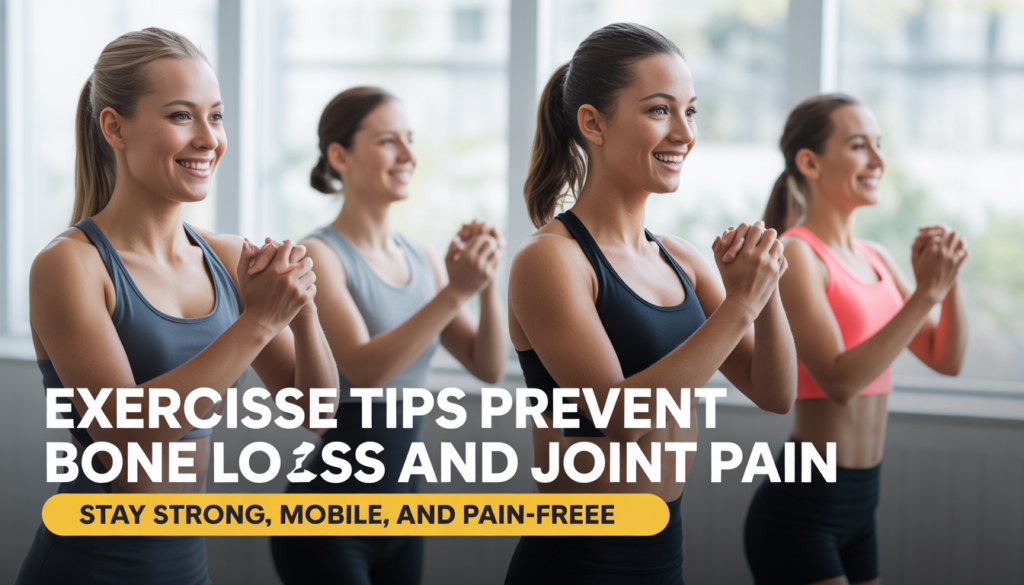
As we age, two silent problems begin to creep in:
👉 Bone loss
👉 Joint pain
At first, it’s subtle—maybe a stiff knee, a sore back, or reduced flexibility. But over time, these issues can lead to serious conditions like osteoporosis, arthritis, and mobility limitations.
Here’s the good news:
👉 The right exercise routine can protect your bones, strengthen your joints, and keep you active for life.
In this complete guide, you’ll learn:
- Why bone loss and joint pain happen
- The best exercises to prevent both
- A weekly workout plan
- Expert-backed tips to stay pain-free
🖼️ How Exercise Supports Bone & Joint Health
Exercise doesn’t just build muscles—it:
- Strengthens bones
- Improves joint flexibility
- Enhances balance
- Reduces inflammation
👉 Physical activity is one of the most effective ways to prevent bone and joint problems.
🧠 Why Bone Loss and Joint Pain Happen
🦴 Bone Loss (Osteoporosis)
Bone density naturally declines with age, increasing fracture risk. According to the National Institute of Arthritis and Musculoskeletal and Skin Diseases, aging increases the likelihood of weakened bones and fractures.
🦵 Joint Pain
Joint pain can result from:
- Wear and tear (osteoarthritis)
- Inflammation
- Weak surrounding muscles
👉 Weak muscles = more stress on joints.
⚠️ The Hidden Risks of Inactivity
A sedentary lifestyle accelerates:
- Bone density loss
- Muscle weakness
- Joint stiffness
Regular exercise helps:
- Build bone density
- Improve balance and coordination
- Reduce fall risk
⭐ The 4 Types of Exercise You NEED
To prevent bone loss and joint pain, you need a combination of:
1. Weight-Bearing Exercises (Bone Builders)
These exercises force your body to work against gravity.
Examples:
- Walking
- Jogging
- Dancing
- Stair climbing
👉 These directly stimulate bone growth and slow bone loss
2. Strength Training (Muscle + Bone Support)
Strength training builds muscle and strengthens bones.
Examples:
- Squats
- Lunges
- Push-ups
- Resistance bands
👉 Resistance exercises improve bone density and muscle strength
3. Flexibility Exercises (Joint Protection)
These improve range of motion and reduce stiffness.
Examples:
- Stretching
- Yoga
👉 Flexible joints are less prone to injury.
4. Balance & Stability Exercises (Fall Prevention)
These reduce the risk of falls and fractures.
Examples:
- Standing on one leg
- Tai Chi
- Heel-to-toe walking
👉 Balance training is especially important for older adults
💡 10 Best Exercises for Bone Health & Joint Pain Relief
1. Walking
Low-impact, easy, and effective
2. Squats
Strengthens hips, knees, and spine
3. Lunges
Improves balance and lower-body strength
4. Push-Ups
Builds upper body strength
5. Resistance Band Workouts
Gentle yet effective for all fitness levels
6. Step-Ups
Improves stability and leg strength
7. Yoga
Enhances flexibility and reduces stiffness
8. Tai Chi
Improves balance and coordination
9. Glute Bridges
Supports lower back and hips
10. Planks
Strengthens core and posture
👉 A mix of these exercises creates a well-rounded routine.
🗓️ Weekly Exercise Plan (Beginner-Friendly)
Day 1: Strength Training (Upper Body)
Day 2: Walking or Cardio
Day 3: Strength Training (Lower Body)
Day 4: Stretching / Yoga
Day 5: Full Body Workout
Day 6: Balance Exercises
Day 7: Rest
👉 Aim for at least 150 minutes of moderate activity per week
🧴 Exercise Tips for Joint Pain Relief
✔ Start Slow
Avoid sudden intense workouts
✔ Warm Up Properly
Prevents injury
✔ Use Low-Impact Exercises
Walking, swimming, cycling
✔ Maintain Proper Form
Reduces stress on joints
✔ Listen to Your Body
Pain is a signal—not something to ignore
🍎 Nutrition Matters Too
Exercise alone isn’t enough.
Key Nutrients:
- Calcium → Bone strength
- Vitamin D → Calcium absorption
- Protein → Muscle support
👉 A balanced diet supports exercise results.
🚫 Exercises to Avoid (If You Have Weak Bones)
- High-impact jumping
- Heavy lifting without supervision
- Twisting motions
👉 These can increase fracture risk in people with osteoporosis
📊 Weight-Bearing vs Non-Weight-Bearing Exercise
| Type | Examples | Benefit |
|---|---|---|
| Weight-Bearing | Walking, running | Builds bone density |
| Non-Weight-Bearing | Swimming, cycling | Good for heart but less for bones |
👉 Both are useful—but weight-bearing is essential.
👩⚕️ Who Should Focus on Bone & Joint Health?
✔ Adults 30+
Bone loss begins early
✔ Women (Post-Menopause)
Higher risk of osteoporosis
✔ Seniors
Higher fall risk
🌎 Why Bone Health Is Trending in the USA (2026)
- Aging population
- Increased awareness of osteoporosis
- Focus on mobility and independence
👉 Exercise is now seen as preventive medicine.
🧾 Pros and Cons of Exercise for Bone Health
✅ Pros
- Stronger bones
- Reduced joint pain
- Better mobility
- Lower fracture risk
❌ Cons
- Requires consistency
- Risk of injury if done incorrectly
🏁 Final Verdict: Can Exercise Prevent Bone Loss?
✔ Yes—exercise is one of the most effective ways to protect your bones and joints.
The formula:
👉 Strength training + weight-bearing + balance + consistency
✨ Conclusion
Bone loss and joint pain may be common—but they are not inevitable.
With the right exercise routine, you can:
- Strengthen your bones
- Protect your joints
- Stay active and independent
👉 Start small, stay consistent, and your body will thank you.