
The beauty industry is undergoing a major transformation. The era of overfilled faces, aggressive anti-aging treatments, and short-term cosmetic fixes is rapidly fading. In its place, a new skincare philosophy is emerging—one focused on regeneration, prevention, and long-term tissue health.
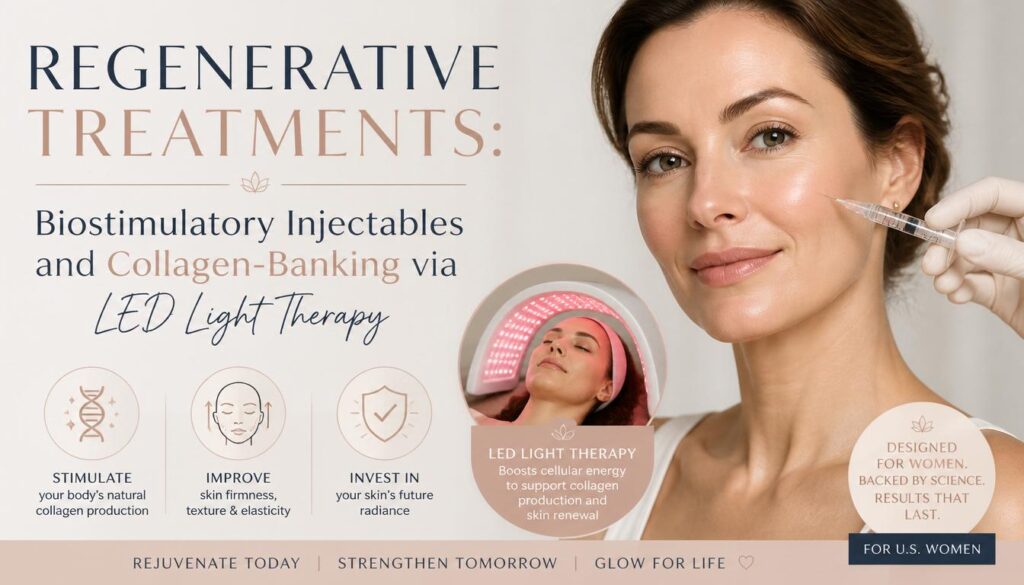
In 2026, two concepts are dominating dermatology clinics, aesthetic medicine conferences, celebrity skincare routines, and social media beauty discussions:
- Biostimulatory injectables
- Collagen banking through LED light therapy
Together, these regenerative treatments represent the future of skin longevity.
Instead of simply masking wrinkles or temporarily plumping the skin, these approaches aim to stimulate the body’s own collagen production, improve skin quality over time, and preserve youthful tissue structure before major aging occurs.
Experts say patients today increasingly want:
- Natural-looking results
- Preventative skincare
- Long-term collagen support
- Minimal downtime
- Healthier skin rather than “frozen” skin
According to dermatologists and aesthetic experts, regenerative treatments are becoming central to modern skincare because consumers are prioritizing skin integrity, elasticity, and gradual improvement over dramatic transformations.
This guide explains the science behind biostimulatory injectables and collagen banking, how LED light therapy works, who these treatments are best for, and why regenerative aesthetics are shaping the future of skincare in the United States.
What Are Regenerative Treatments?
Regenerative treatments are procedures and skincare technologies designed to stimulate the skin’s natural repair and rebuilding mechanisms.
Unlike traditional cosmetic treatments that create immediate but temporary visual changes, regenerative aesthetics focus on:
- Collagen production
- Elastin support
- Cellular communication
- Tissue regeneration
- Skin resilience
- Long-term structural improvement
Experts say modern patients increasingly prefer treatments that “work with the body rather than against it.”
This shift is part of the growing “skin longevity” movement—a philosophy that treats skincare as an investment in future skin health rather than a quick cosmetic correction.
Why Collagen Matters So Much
Collagen is the structural protein responsible for keeping skin:
- Firm
- Smooth
- Elastic
- Plump
- Strong
It acts like scaffolding beneath the skin’s surface.
However, collagen production naturally declines beginning around the mid-to-late 20s. Factors accelerating collagen loss include:
- UV exposure
- Smoking
- Stress
- Pollution
- Inflammation
- Poor sleep
- Excessive sugar consumption
- Over-exfoliation
As collagen decreases, skin begins developing:
- Fine lines
- Sagging
- Thinning
- Wrinkles
- Texture changes
- Loss of elasticity
This is why collagen stimulation has become one of the biggest priorities in regenerative dermatology.
What Is “Collagen Banking”?
Collagen banking is a preventative skincare strategy focused on preserving and stimulating collagen production before significant aging appears.
The concept suggests that by encouraging collagen synthesis earlier in life, people may maintain skin firmness and elasticity longer as they age.
Rather than waiting until severe collagen loss occurs, collagen banking focuses on:
- Prevention
- Maintenance
- Gradual rejuvenation
- Long-term tissue quality
Common collagen-banking treatments include:
- LED light therapy
- Microneedling
- PRP therapy
- Laser resurfacing
- Biostimulatory injectables
- Radiofrequency devices
- Peptide-based skincare
While some experts caution that “collagen banking” can become a marketing buzzword, many dermatologists agree that collagen-supportive treatments can improve long-term skin quality when used appropriately.
What Are Biostimulatory Injectables?
Biostimulatory injectables are cosmetic injectables designed to stimulate the body’s own collagen and elastin production over time.
Unlike traditional fillers that mainly add instant volume, biostimulators encourage the skin to rebuild itself gradually.
Experts say these treatments are becoming increasingly popular because they create subtle, natural-looking results while improving skin quality beneath the surface.
How Biostimulators Work
Biostimulators trigger fibroblasts—the cells responsible for collagen production.
Once injected, these products help stimulate:
- Collagen remodeling
- Elastin synthesis
- Tissue support
- Skin firmness
- Structural integrity
Results appear gradually over several months rather than instantly.
This slower process is one reason regenerative injectables are often preferred by patients seeking:
- Natural enhancements
- Preventative anti-aging
- Subtle rejuvenation
- Long-term improvement
Popular Biostimulatory Injectables in 2026
Several collagen-stimulating injectables are leading the regenerative skincare movement.
1. Sculptra (PLLA)
Sculptra is one of the most recognized biostimulatory injectables in modern aesthetics.
Made with poly-L-lactic acid (PLLA), Sculptra gradually stimulates collagen production over time.
Benefits may include:
- Improved facial volume
- Firmer skin
- Better elasticity
- Reduced fine lines
- Long-term collagen support
Experts say Sculptra is especially popular among patients seeking subtle rejuvenation instead of dramatic facial changes.
2. Radiesse
Radiesse uses calcium hydroxylapatite microspheres to stimulate collagen production while also providing immediate structural support.
Common treatment areas include:
- Jawline
- Cheeks
- Hands
- Neck
It’s often used for patients wanting firmer, more sculpted skin with regenerative benefits.
3. Julaine
Julaine is a newer bio-activator gaining attention in regenerative dermatology.
Experts say it stimulates the tissue-supporting network around skin cells while supporting collagen and elastin production with minimal inflammation.
4. Polynucleotides & PDRN
Injectables using polynucleotides and PDRN (polydeoxyribonucleotides) are also becoming increasingly popular.
Often derived from salmon DNA technology, these treatments aim to:
- Improve hydration
- Enhance healing
- Support regeneration
- Stimulate collagen
Experts note these regenerative injectables are especially popular in Korean aesthetic medicine.
Why Patients Prefer Regenerative Injectables
Modern consumers increasingly dislike the “overdone” cosmetic appearance associated with older filler trends.
Patients now want:
- Facial movement
- Natural texture
- Healthy-looking skin
- Gradual improvements
- Minimal swelling
- Skin quality enhancement
Experts say regenerative injectables appeal because they support tissue health instead of simply adding artificial volume.
What Is LED Light Therapy?
LED light therapy is a non-invasive skincare treatment that uses specific wavelengths of light to stimulate biological activity within the skin.
The technology is also known as:
- Photobiomodulation
- Red light therapy
- Low-level light therapy
LED devices are now available in:
- Dermatology clinics
- Medical spas
- At-home masks
- Panels
- Neck devices
- Scalp devices
Experts say LED therapy has become one of the fastest-growing categories in beauty technology.
How LED Therapy Supports Collagen Banking
Red and near-infrared LED wavelengths penetrate the skin and may help stimulate cellular energy production.
Research suggests LED therapy may:
- Support collagen synthesis
- Reduce inflammation
- Improve circulation
- Accelerate healing
- Enhance skin recovery
- Improve elasticity
Dermatologists increasingly recommend LED therapy as part of preventative “collagen banking” strategies.
Why LED Therapy Is So Popular
LED light therapy appeals to consumers because it is:
- Non-invasive
- Painless
- Minimal downtime
- Safe for most skin types
- Compatible with other treatments
- Easy to use at home
Modern consumers increasingly prefer gradual, wellness-oriented skincare rather than aggressive resurfacing procedures.
The Science Behind Red Light Therapy
Red light therapy primarily targets mitochondria—the energy-producing structures inside cells.
Scientists believe this stimulation may improve:
- Cellular repair
- ATP energy production
- Fibroblast activity
- Wound healing
- Collagen formation
This biological approach aligns closely with the skin longevity movement currently shaping dermatology trends.
Collagen Banking at Home vs In-Clinic
Consumers now have access to both professional and at-home regenerative treatments.
Professional Treatments
Clinic-based collagen banking treatments include:
- Medical-grade LED panels
- Microneedling
- Fractional lasers
- PRP therapy
- Biostimulatory injectables
- Radiofrequency devices
These treatments usually provide stronger and faster results.
At-Home Treatments
Home skincare technologies now include:
- LED masks
- Microcurrent devices
- Peptide serums
- Growth factor creams
- Red light panels
Experts say consistency matters more than intensity for at-home collagen-supportive treatments.
Combining LED Therapy With Biostimulatory Treatments
One of the biggest skincare trends in 2026 is “treatment stacking.”
Instead of relying on a single procedure, dermatologists increasingly combine:
- LED therapy
- Peptides
- Microneedling
- Biostimulators
- Exosomes
- Growth factors
Experts say LED therapy may enhance post-procedure recovery while supporting tissue repair and reducing inflammation.
Best Ingredients to Pair With Collagen-Banking Routines
Regenerative treatments work best alongside supportive skincare ingredients.
Peptides
Peptides act as cellular messengers encouraging collagen production.
Experts say peptides are replacing harsh exfoliation as skincare becomes more barrier-focused.
Vitamin C
Vitamin C helps:
- Protect collagen from oxidative stress
- Brighten skin
- Support firmness
- Improve photodamage
Ceramides
Ceramides strengthen the skin barrier and reduce moisture loss.
Barrier repair is increasingly central to modern regenerative skincare.
Retinoids
Retinoids remain one of the most clinically studied collagen-supportive ingredients.
Modern formulas increasingly prioritize:
- Gentler delivery systems
- Barrier support
- Reduced irritation
Growth Factors & Exosomes
These regenerative ingredients support:
- Cellular communication
- Tissue repair
- Recovery after procedures
Experts expect exosome-based skincare to continue growing rapidly.
Who Should Consider Collagen Banking?
Collagen-supportive treatments may benefit:
- Adults in their late 20s and beyond
- People with early signs of aging
- Patients recovering from barrier damage
- Individuals wanting preventative skincare
- Consumers avoiding surgery or heavy fillers
Many younger consumers are now investing in “prejuvenation”—preventative treatments designed to preserve skin quality before major aging develops.
Risks and Considerations
While regenerative treatments are exciting, consumers should approach them realistically.
Biostimulatory Injectables Risks
Possible side effects include:
- Swelling
- Bruising
- Nodules
- Uneven results
- Delayed reactions
Treatment should always be performed by qualified professionals.
LED Therapy Considerations
LED therapy is generally considered safe, but:
- Results require consistency
- At-home devices vary in quality
- Overpromising marketing is common
Experts emphasize that collagen banking should complement—not replace—foundational skincare habits like:
- Sunscreen
- Sleep
- Hydration
- Healthy nutrition
The Future of Regenerative Aesthetics
Experts predict regenerative dermatology will continue evolving rapidly over the next decade.
Emerging trends include:
- AI-guided skin analysis
- Personalized collagen therapies
- Exosome-enhanced injectables
- Cellular longevity skincare
- Biomarker-driven aesthetics
- Combination regenerative protocols
- Advanced photobiomodulation devices
The skincare industry is increasingly merging:
- Biotechnology
- Wellness
- Longevity science
- Dermatology
- Preventative medicine
into a new generation of skin health-focused treatments.
Final Thoughts
Biostimulatory injectables and collagen banking through LED light therapy represent a major shift in modern aesthetics.
Instead of chasing temporary fixes or dramatic cosmetic alterations, regenerative skincare focuses on:
- Supporting collagen naturally
- Preserving tissue health
- Strengthening skin function
- Encouraging gradual rejuvenation
- Promoting healthier aging
The future of skincare is becoming less about “anti-aging” and more about longevity, resilience, and regeneration.
For consumers, the most effective strategy is balance:
- Combine proven skincare fundamentals with science-backed regenerative treatments
- Focus on consistency instead of quick results
- Prioritize skin health over perfection
Because the real goal of modern skincare is no longer looking artificially younger overnight.
It’s building stronger, healthier skin that continues to age beautifully over time.