
The skincare industry is entering a new era—one driven not by harsh exfoliation or quick cosmetic fixes, but by regeneration, cellular repair, and long-term skin health.
In 2026, two ingredients are dominating conversations in dermatology clinics, K-beauty labs, celebrity facial treatments, and social media skincare communities: PDRN and exosomes.
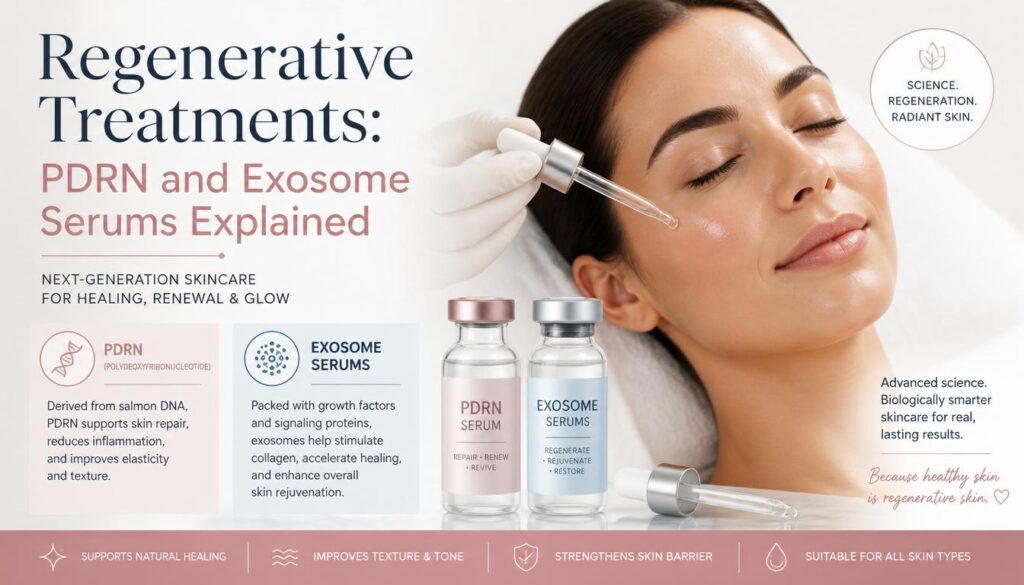
Often described as the future of regenerative skincare, these biotech-inspired ingredients are appearing in:
- Luxury serums
- Dermatology procedures
- Recovery treatments
- Anti-aging routines
- Barrier repair products
- Post-procedure skincare
The growing popularity of “salmon sperm facials” and exosome serums reflects a larger beauty shift toward skin longevity and tissue regeneration. Experts say consumers are increasingly prioritizing collagen preservation, inflammation reduction, and healthier skin function over aggressive anti-aging treatments.
But what exactly are PDRN and exosomes?
Do they actually work?
And are they worth the hype?
This guide explains the science, benefits, risks, and future of regenerative skincare for American consumers navigating one of beauty’s fastest-growing trends.
What Is Regenerative Skincare?
Regenerative skincare refers to treatments and ingredients designed to support the skin’s natural healing and renewal processes.
Instead of simply masking aging signs temporarily, regenerative treatments aim to:
- Stimulate collagen production
- Improve cellular communication
- Strengthen the skin barrier
- Reduce inflammation
- Support tissue repair
- Enhance elasticity
- Preserve long-term skin quality
This movement is heavily influenced by regenerative medicine, longevity science, and advanced dermatology research.
According to experts, the skincare industry is moving away from aggressive “anti-aging” messaging and toward skin rejuvenation and resilience.
Why Regenerative Treatments Are Trending in 2026
Several beauty and wellness trends are fueling the regenerative skincare boom.
1. Consumers Want Natural-Looking Results
People are increasingly moving away from:
- Overfilled cosmetic looks
- Excessive injectables
- Aggressive resurfacing
- Heavy filters and unrealistic beauty standards
Instead, they want:
- Healthy texture
- Strong skin barrier function
- Gradual improvements
- Long-term collagen support
2. Skin Barrier Awareness Has Exploded
Years of over-exfoliation and excessive active ingredients have left many consumers dealing with:
- Sensitivity
- Redness
- Dehydration
- Inflammation
- Acne flare-ups
Regenerative ingredients are marketed as gentler alternatives focused on repair rather than irritation.
3. K-Beauty Is Leading Innovation
Korean skincare brands have accelerated global interest in regenerative ingredients like:
- PDRN
- Exosomes
- Peptides
- Growth factors
- Spicule technology
Experts say K-beauty brands excel at translating advanced clinic-inspired technologies into accessible at-home skincare.
What Is PDRN?
PDRN stands for Polydeoxyribonucleotide.
It’s a regenerative ingredient made from DNA fragments, traditionally derived from salmon sperm cells or salmon reproductive tissue.
Yes—the “salmon sperm facial” nickname is technically connected to PDRN, although dermatologists clarify that the ingredient itself is purified DNA fragments rather than raw sperm.
PDRN was originally studied and used in medical settings for:
- Wound healing
- Tissue regeneration
- Burn recovery
- Inflammation reduction
Today, it’s being used in:
- Injectable skin boosters
- Topical serums
- Creams
- Masks
- Dermatology treatments
Why Salmon DNA?
Scientists discovered that salmon DNA shares structural similarities with human DNA and may help support tissue repair mechanisms.
Experts say PDRN may:
- Stimulate collagen production
- Improve hydration
- Reduce inflammation
- Enhance skin recovery
- Improve elasticity
- Support healing after procedures
Dermatologists note that injectable PDRN treatments generally produce more dramatic results than topical skincare because injections penetrate deeper into the skin.
How PDRN Works on the Skin
PDRN interacts with cellular repair pathways, particularly adenosine A2A receptors involved in wound healing and inflammation regulation.
The ingredient may help:
- Stimulate fibroblasts
- Support collagen synthesis
- Improve blood circulation
- Accelerate tissue repair
- Reduce oxidative stress
This makes it appealing for:
- Aging skin
- Dullness
- Acne scars
- Redness
- Barrier damage
- Post-procedure recovery
Injectable PDRN vs Topical PDRN
One of the biggest misconceptions online is that all PDRN products work equally.
They do not.
Injectable PDRN
Professional treatments deliver PDRN directly into deeper skin layers.
Benefits may include:
- Faster collagen stimulation
- Better hydration
- Improved elasticity
- Stronger regenerative effects
These procedures are popular in Korea and luxury dermatology clinics.
Topical PDRN Serums
At-home serums and creams are less invasive and easier to use daily.
However, experts note that topical PDRN molecules may have limited penetration due to their molecular size.
That said, many formulas still provide:
- Hydration
- Barrier support
- Soothing benefits
- Surface-level glow enhancement
especially when combined with proven ingredients like:
- Niacinamide
- Ceramides
- Peptides
- Hyaluronic acid
What Are Exosomes?
Exosomes are microscopic extracellular vesicles naturally released by cells.
Think of them as tiny biological messengers that help cells communicate with one another.
Exosomes carry:
- Proteins
- Lipids
- Peptides
- Growth signals
- Genetic material
In regenerative skincare, exosomes are used to support:
- Skin repair
- Collagen production
- Cellular communication
- Inflammation reduction
- Tissue regeneration
Experts describe exosomes as one of the defining skincare trends of 2026.
How Exosome Serums Work
Exosomes help “signal” skin cells to repair and regenerate more efficiently.
Researchers believe they may:
- Improve skin texture
- Support wound healing
- Enhance collagen remodeling
- Calm inflammation
- Accelerate recovery after procedures
Unlike harsh resurfacing treatments, exosome skincare focuses on biological communication and recovery.
Experts say this aligns perfectly with the modern “skin longevity” movement.
Why Exosomes Are Becoming So Popular
Exosome technology appeals to modern skincare consumers because it combines:
- Biotechnology
- Dermatology
- Non-invasive beauty
- Longevity science
- Barrier-first skincare
Consumers increasingly want treatments that improve skin gradually without:
- Peeling
- Irritation
- Downtime
- Frozen facial movement
Exosome serums fit this demand for gentler but scientifically advanced skincare.
PDRN vs Exosomes: What’s the Difference?
Although both ingredients belong to regenerative skincare, they function differently.
| Feature | PDRN | Exosomes |
|---|---|---|
| Main Function | Tissue repair support | Cellular communication |
| Source | Salmon DNA fragments or plant-based biotech | Cell-derived vesicles |
| Focus | Collagen stimulation + healing | Regeneration signaling |
| Common Use | Skin boosters, serums | Recovery treatments, serums |
| Best For | Hydration, repair, elasticity | Post-procedure healing, rejuvenation |
| Popular In | K-beauty, injectables | Dermatology clinics + luxury skincare |
Both ingredients are often paired together in modern regenerative formulas.
Are PDRN and Exosome Serums Actually Effective?
This is where nuance matters.
What Experts Support
Dermatologists generally agree that regenerative treatments show promising potential for:
- Healing support
- Barrier recovery
- Hydration
- Inflammation reduction
- Collagen stimulation
Injectable versions currently have stronger scientific support than topical versions.
What Still Needs More Research
Many topical serums make dramatic claims that exceed current clinical evidence.
Experts caution that:
- Topical penetration may be limited
- Results vary significantly by formulation
- Marketing hype often moves faster than research
Some dermatologists warn consumers not to abandon proven ingredients like:
- Retinoids
- Vitamin C
- Sunscreen
- Ceramides
in favor of trend-driven products alone.
The Rise of Vegan PDRN
One of the biggest developments in 2026 is plant-based or lab-engineered PDRN alternatives.
Brands are now creating biotech-derived regenerative ingredients using:
- Ginseng
- Green tea
- Rose stem cells
- Fermented biotechnology
These vegan alternatives appeal to consumers concerned about:
- Animal welfare
- Sustainability
- Allergies
- Ethical sourcing
Experts say injectable salmon-derived PDRN still appears more potent, but plant-based versions are becoming increasingly sophisticated.
Potential Benefits of Regenerative Serums
Consumers using PDRN and exosome skincare commonly report improvements in:
Hydration
Many formulas contain humectants and barrier-supportive ingredients that improve moisture retention.
Skin Texture
Users often notice smoother-looking skin and improved softness.
Glow & Radiance
PDRN products are frequently associated with the “glass skin” appearance popularized by K-beauty.
Reduced Redness
Regenerative ingredients are often marketed for calming stressed or sensitive skin.
Barrier Recovery
These products are especially popular after:
- Microneedling
- Lasers
- Chemical peels
- Retinoid irritation
Potential Risks and Concerns
Regenerative skincare is exciting—but consumers should remain informed.
Limited Regulation
Not all products are equally tested or clinically validated.
Marketing Hype
Some brands exaggerate claims around “cellular regeneration.”
Allergies & Sensitivities
Animal-derived ingredients may not suit everyone.
Counterfeit Products
Experts warn consumers to purchase only from reputable retailers and licensed clinics.
Best Ingredients to Pair With PDRN & Exosomes
Regenerative serums often work best alongside supportive skincare ingredients.
Ceramides
Help strengthen the skin barrier.
Peptides
Support collagen and elasticity.
Niacinamide
Reduces redness and improves resilience.
Hyaluronic Acid
Enhances hydration and plumping.
Panthenol
Calms irritation and supports healing.
Who Should Try Regenerative Skincare?
These products may benefit people dealing with:
- Dry skin
- Sensitive skin
- Early aging concerns
- Post-procedure recovery
- Barrier damage
- Dullness
- Mild texture irregularities
However, expectations should remain realistic.
Regenerative serums are typically gradual, supportive treatments—not overnight miracle products.
The Future of Regenerative Beauty
Experts believe regenerative skincare will continue evolving rapidly over the next several years.
Future innovations may include:
- Personalized exosome therapy
- AI-driven skin regeneration analysis
- Advanced delivery systems
- Stem-cell-inspired skincare
- Microbiome regeneration
- Biotech collagen stimulation
- Longevity-focused dermatology
Beauty brands are increasingly blending:
- Biotechnology
- Dermatology
- Wellness science
- Preventative skincare
into a new generation of skin health-focused products.
Final Thoughts
PDRN and exosome serums represent a major shift in modern skincare.
Rather than relying on harsh treatments or temporary cosmetic fixes, regenerative skincare focuses on helping the skin repair, communicate, and function better over time.
While some of the hype may outpace the science, experts agree that the future of skincare is increasingly centered around:
- Barrier repair
- Collagen support
- Tissue regeneration
- Long-term skin resilience
- Preventative skin health
For consumers, the key is balance.
PDRN and exosome serums can be exciting additions to a healthy skincare routine—but they work best when combined with proven fundamentals like:
- Sunscreen
- Hydration
- Gentle cleansing
- Consistent barrier support
- Scientifically backed ingredients
The regenerative skincare era isn’t really about chasing perfection.
It’s about creating healthier skin that continues functioning beautifully for years to come.