
The skincare industry is undergoing one of its biggest transformations in decades. For years, beauty culture focused heavily on instant gratification: overnight glow, quick fixes, dramatic resurfacing, and aggressive anti-aging procedures. But in 2026, consumers are thinking differently.
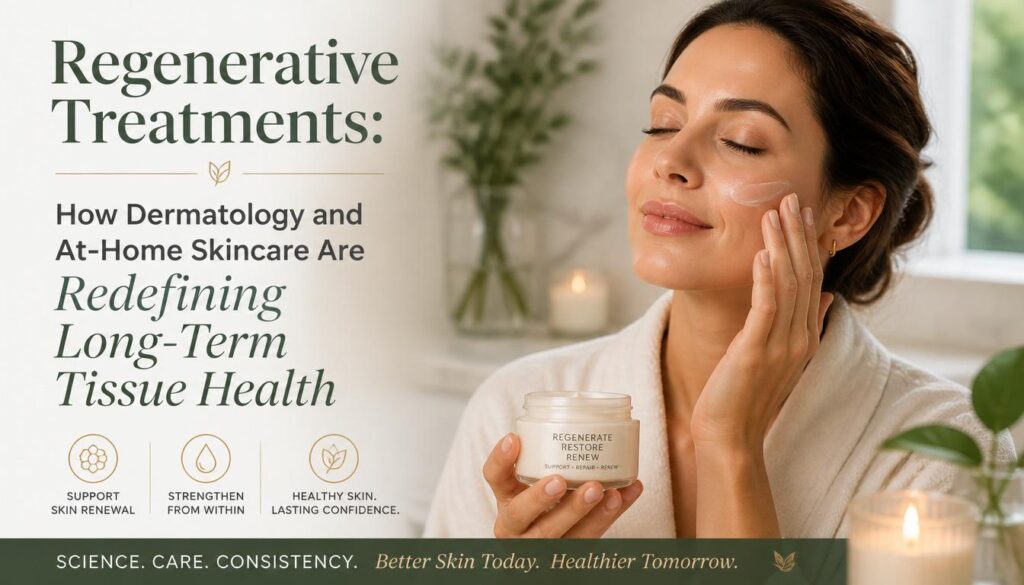
Today’s skincare movement is centered around regeneration, longevity, and tissue health.
Instead of asking how to erase wrinkles overnight, people are asking how to preserve collagen, support cellular repair, strengthen skin resilience, and maintain healthy skin for decades. This shift has blurred the lines between professional dermatology treatments and at-home skincare routines, creating a new category often referred to as regenerative skincare.
According to experts, regenerative aesthetics now prioritize skin health, tissue integrity, and collagen stimulation rather than temporary cosmetic corrections. Dermatologists report increasing demand for treatments that support the skin’s natural repair systems while maintaining a subtle, healthy appearance.
From exosomes and peptides to PRP microneedling and LED therapy, the future of skincare is no longer about “fixing flaws.” It’s about helping skin function better at a biological level.
What Are Regenerative Treatments?
Regenerative treatments are therapies, ingredients, and technologies designed to stimulate the body’s natural healing and repair mechanisms.
Unlike traditional cosmetic approaches that temporarily mask aging signs, regenerative skincare focuses on:
- Supporting collagen production
- Enhancing cellular turnover
- Improving tissue repair
- Reducing chronic inflammation
- Protecting the skin barrier
- Encouraging healthy skin communication
- Preserving elasticity and firmness
The goal is not to create dramatically altered skin—but healthier, stronger, more resilient skin over time.
This philosophy is increasingly influencing both in-office dermatology procedures and daily skincare routines at home.
Why the Beauty Industry Is Moving Beyond Quick Fixes
Consumers are becoming more skeptical of extreme beauty trends and aggressive aesthetic procedures.
Many dermatologists say patients now want:
- Natural-looking results
- Preventative skincare
- Long-term skin quality improvements
- Minimal downtime
- Health-focused aesthetics
Experts note that “overfilled” cosmetic looks are declining in popularity as people seek treatments that preserve facial movement, texture, and skin integrity.
At the same time, social media has increased awareness around:
- Skin barrier damage
- Over-exfoliation
- Inflammation
- Premature aging from aggressive treatments
This cultural shift has helped fuel demand for regenerative therapies that work with the skin instead of against it.
The Science Behind Regenerative Skincare
Healthy skin relies on constant repair and renewal.
As we age, several biological functions slow down:
- Collagen production declines
- Cell turnover becomes slower
- Elasticity decreases
- Hydration retention weakens
- Inflammation increases
- Skin barrier recovery takes longer
Regenerative skincare aims to support these functions before severe damage occurs.
Many modern treatments now target:
- Fibroblast stimulation
- Mitochondrial function
- Cellular signaling
- Growth factor activity
- Extracellular matrix support
Industry experts describe this movement as part of the broader “skin longevity” trend shaping skincare in 2026.
How Dermatology and At-Home Routines Are Merging
One of the biggest skincare shifts today is the blending of clinical treatments with daily home maintenance.
Patients no longer rely solely on occasional dermatology visits. Instead, they combine:
- Professional procedures
- Medical-grade skincare
- Recovery-focused routines
- Preventative care
- At-home beauty devices
This integrated approach creates cumulative, long-term improvements.
For example:
- Microneedling sessions are paired with peptide serums
- LED light therapy complements collagen treatments
- Barrier-repair creams support post-procedure healing
- Growth factor products extend clinic results at home
Experts predict that skincare routines will become increasingly personalized and data-driven as technology advances.
The Most Popular Regenerative Dermatology Treatments in 2026
Modern regenerative dermatology focuses on stimulating the body’s own repair systems instead of simply adding volume or tightening skin artificially.
Here are the treatments leading the movement.
1. Microneedling With PRP
Microneedling combined with platelet-rich plasma (PRP) remains one of the most requested regenerative treatments.
Microneedling creates controlled micro-injuries in the skin, stimulating collagen production naturally. PRP, derived from the patient’s own blood, enhances healing and tissue regeneration.
Benefits include:
- Improved skin texture
- Reduced acne scars
- Better elasticity
- Smoother fine lines
- Faster healing
Many dermatologists now view PRP as part of the long-term skin longevity movement.
2. Biostimulator Injectables
Biostimulators are injectable treatments designed to trigger collagen production gradually over time.
Unlike traditional fillers that primarily add volume, regenerative injectables work by stimulating the skin’s natural structural support.
Popular biostimulators include:
- Sculptra
- Julaine
- Poly-L-lactic acid treatments
Dermatologists say these treatments provide more natural-looking improvements while preserving facial harmony and tissue integrity.
3. Exosome Therapy
Exosomes are one of the most talked-about innovations in regenerative aesthetics.
Exosomes are tiny extracellular vesicles that help cells communicate and repair tissue. In skincare, they’re used to:
- Reduce inflammation
- Accelerate healing
- Improve collagen production
- Enhance post-procedure recovery
Experts predict exosome technology will continue moving from clinics into topical skincare products.
4. LED Light Therapy
LED therapy has evolved far beyond spa facials.
Modern photobiomodulation technology supports:
- Tissue repair
- Inflammation reduction
- Collagen stimulation
- Acne control
Experts increasingly combine LED therapy with peptides and regenerative ingredients to amplify healing and skin rejuvenation.
5. Radiofrequency & Ultrasound Tightening
Non-invasive skin tightening procedures are replacing more aggressive cosmetic interventions.
Technologies using:
- Radiofrequency
- Ultrasound energy
- Thermal stimulation
help trigger collagen remodeling without surgery.
These procedures appeal to consumers who want gradual, natural-looking improvements with minimal downtime.
The Rise of At-Home Regenerative Skincare
Professional treatments are increasingly supported by sophisticated at-home routines.
Consumers now have access to:
- Clinical-grade peptides
- LED masks
- Growth factor serums
- Barrier repair moisturizers
- Microcurrent devices
- Exosome-infused skincare
This shift has made regenerative skincare more accessible than ever.
Experts say the future lies in consistent low-level stimulation and long-term maintenance rather than occasional aggressive treatments.
Key Ingredients Driving the Regenerative Skincare Movement
The modern skincare market is prioritizing ingredients that support biological skin function rather than harsh exfoliation.
Here are the leading regenerative skincare ingredients in 2026.
Peptides
Peptides are now considered foundational ingredients in regenerative skincare.
They function as cellular messengers that encourage:
- Collagen production
- Elastin support
- Tissue repair
- Reduced inflammation
Experts say peptides are replacing many aggressive exfoliating treatments because they strengthen skin without damaging the barrier.
Growth Factors
Growth factors are proteins that help regulate skin repair and regeneration.
Benefits may include:
- Improved hydration
- Faster healing
- Enhanced elasticity
- Smoother texture
These ingredients are becoming increasingly popular in post-procedure skincare routines.
PDRN (Polydeoxyribonucleotide)
PDRN—often derived from salmon DNA—is gaining traction for its regenerative properties.
Research and skincare experts suggest it may:
- Support wound healing
- Reduce inflammation
- Improve collagen synthesis
- Enhance skin repair
K-beauty brands have played a major role in bringing PDRN products into mainstream skincare.
Ectoin
Ectoin is emerging as a powerful barrier-protective ingredient.
Experts say it helps:
- Defend against environmental stress
- Retain moisture
- Calm irritation
- Reduce inflammation
Ectoin is especially popular in sensitive skin and longevity-focused skincare formulations.
Ceramides
Ceramides remain essential for maintaining healthy tissue function.
They strengthen the skin barrier and prevent moisture loss, making them critical for regenerative skincare routines.
NAD+ & Cellular Energy Ingredients
Cellular energy support is becoming a growing category within longevity skincare.
Ingredients targeting mitochondrial health—including NAD+ support and antioxidants like CoQ10—are gaining attention for their role in maintaining cellular function.
Why Barrier Repair Is Central to Regeneration
Regenerative skincare is impossible without a healthy skin barrier.
The skin barrier:
- Retains hydration
- Protects against inflammation
- Prevents environmental damage
- Supports healing
Many consumers damaged their barriers through years of:
- Over-exfoliation
- Excessive acids
- Harsh retinoids
- Multi-step routines
Now, dermatologists increasingly recommend simplified routines centered around:
- Gentle cleansers
- Ceramides
- Hydration
- SPF
- Barrier-repair creams
Experts say barrier-first skincare is becoming the dominant philosophy in 2026.
The Shift Toward “Prejuvenation”
Younger consumers are now investing in prevention rather than correction.
This movement—often called “prejuvenation”—focuses on maintaining skin quality before visible aging accelerates.
Popular preventative strategies include:
- LED therapy
- Baby Botox
- Preventative retinoids
- Peptide serums
- Daily SPF
- Microneedling maintenance
- Collagen-supportive skincare
Experts say people in their 20s and 30s are increasingly adopting regenerative treatments to preserve long-term tissue health.
The Connection Between Wellness and Skin Regeneration
Modern skincare is becoming deeply connected to overall wellness.
Experts increasingly recognize that skin health is affected by:
- Sleep quality
- Stress levels
- Nutrition
- Hormones
- Inflammation
- Exercise
- Gut health
Many skincare professionals now combine:
- Lifestyle coaching
- Stress management
- Sleep optimization
- Wellness tracking
- Personalized skincare
This holistic approach reflects the growing overlap between dermatology, longevity medicine, and wellness culture.
Why Consumers Are Embracing Simpler Routines
Despite technological advancements, many consumers are simplifying their daily routines.
Online skincare communities increasingly report better skin after reducing excessive product layering.
Users often describe improvements in:
- Redness
- Sensitivity
- Breakouts
- Skin texture
- Hydration balance
The modern philosophy is no longer:
“Use more products.”
Instead, it’s:
“Use smarter products consistently.”
The Future of Regenerative Skincare
The next generation of skincare will likely become even more personalized and biology-driven.
Emerging trends include:
- AI-powered skin analysis
- Personalized formulations
- Biomarker testing
- Advanced exosome delivery
- Collagen banking
- Regenerative injectables
- Microbiome-focused skincare
- At-home diagnostic tools
Experts believe skincare will continue moving away from temporary cosmetic enhancement toward maintaining tissue health, resilience, and function over a lifetime.
Final Thoughts
Regenerative skincare represents a major evolution in how people think about beauty and aging.
Instead of chasing unrealistic perfection, consumers are prioritizing:
- Skin health
- Longevity
- Prevention
- Tissue integrity
- Natural-looking results
Dermatology clinics and at-home skincare routines are no longer separate worlds. Together, they now form an integrated approach focused on helping skin repair, regenerate, and thrive over time.
The future of skincare is not about forcing dramatic transformation overnight.
It’s about building healthier skin—slowly, consistently, and sustainably—for the long run.