vThe skincare industry is experiencing a dramatic shift. Consumers are moving away from complicated ingredient lists and synthetic-heavy formulations in favor of simpler, nutrient-dense, and traditionally inspired skincare products. One ingredient leading this movement is beef tallow moisturizer — a once-forgotten skincare staple that has exploded back into mainstream beauty culture.
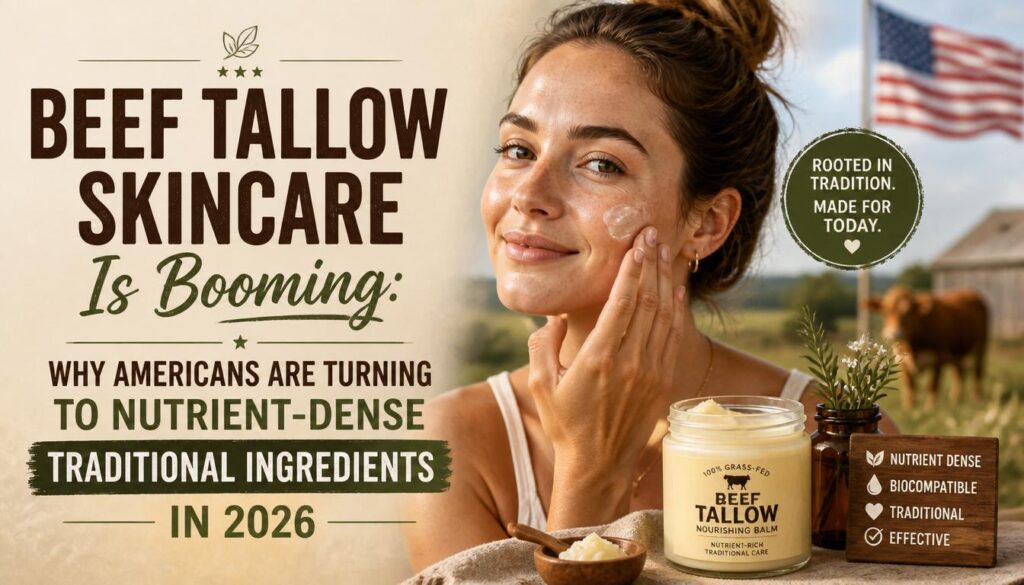
According to trend data, search interest for beef tallow moisturizer surged by an astonishing 472% over the past year, highlighting a massive rise in consumer curiosity and demand.
But why are Americans suddenly applying rendered animal fat to their skin?
The answer lies in several intersecting trends shaping the modern beauty industry:
- The rise of clean beauty skincare
- Growing distrust of synthetic ingredients
- Interest in ancestral wellness routines
- Demand for barrier repair moisturizers
- Social media-fueled “skin minimalism”
- Desire for bioavailable nutrients in skincare
This long-form guide explores everything consumers need to know about beef tallow skincare, including benefits, drawbacks, dermatologists’ opinions, sustainability concerns, ingredient science, and what this trend means for the future of the U.S. skincare market.
The Rise of Traditional Ingredients in Modern Skincare
Today’s skincare consumers are more informed than ever. Instead of chasing endless 12-step routines, many Americans are prioritizing:
- Skin barrier health
- Ingredient transparency
- Minimalist formulations
- Natural moisturizers
- Sustainable skincare
- Non-toxic beauty products
This has fueled renewed interest in traditional ingredients once used for centuries before industrialized cosmetics dominated the market.
Some of the fastest-growing traditional skincare ingredients include:
- Beef tallow
- Snail mucin
- Beef collagen
- Goat milk
- Lanolin
- Beeswax
- Herbal infusions
- Fermented botanicals
Among them, beef tallow has become one of the most polarizing and viral skincare trends online.
What Is Beef Tallow?
Beef tallow is rendered fat derived from cows, usually sourced from suet — the dense fat surrounding the kidneys. When slowly heated and purified, the fat becomes a stable, creamy substance commonly used in cooking, soap making, and now skincare.
Unlike heavily processed moisturizers, tallow-based skincare products are often marketed as:
- Grass-fed
- Organic
- Non-toxic
- Fragrance-free
- Preservative-free
- Nutrient-rich
Supporters claim tallow closely mimics the skin’s natural oils, making it highly compatible with human skin.
Dermatologists note that beef tallow contains fatty acids naturally found in the skin barrier, including:
- Palmitic acid
- Stearic acid
- Oleic acid
It also contains small amounts of fat-soluble vitamins like vitamins A, D, E, and K.
Why Beef Tallow Moisturizers Are Exploding in Popularity
The recent boom isn’t random. Several cultural and consumer trends are pushing tallow skincare into the spotlight.
1. The “Clean Beauty” Movement
Consumers are increasingly skeptical of long ingredient labels filled with:
- Silicones
- Synthetic fragrances
- Petroleum derivatives
- Artificial preservatives
- Harsh alcohols
Beef tallow products often contain just a few ingredients, making them attractive to clean beauty enthusiasts.
2. TikTok and Social Media Influence
TikTok has massively accelerated the trend. Influencers promote whipped tallow creams as solutions for:
- Dry skin
- Eczema
- Acne
- Skin inflammation
- Aging skin
- Redness
Millions of views have helped tallow skincare become part of the broader “ancestral skincare” movement.
3. The Skin Barrier Repair Trend
Modern skincare routines often overuse:
- Exfoliating acids
- Retinoids
- Peels
- Harsh cleansers
This damages the skin barrier, causing irritation and dehydration.
Consumers are now searching for rich occlusive moisturizers that help restore skin balance — and tallow products fit that demand perfectly.
4. Minimalist Skincare Routines
The “skinimalism” movement encourages fewer products and simpler routines.
Many tallow users claim they replaced multiple products with a single balm, reducing:
- Irritation
- Product overload
- Spending
- Complexity
The Science Behind Beef Tallow for Skin
One major reason for beef tallow’s popularity is its similarity to human sebum.
Human skin naturally produces lipids that help:
- Lock in moisture
- Prevent water loss
- Protect against irritants
- Maintain elasticity
Beef tallow contains similar lipid structures, which may explain why some users find it deeply moisturizing.
Potential skincare benefits include:
Deep Moisture Retention
Tallow acts as an occlusive moisturizer that seals hydration into the skin.
Skin Barrier Support
The fatty acid composition may help reinforce the skin’s protective barrier.
Reduced Transepidermal Water Loss
Rich emollients can help reduce moisture evaporation.
Softening Dry Skin
Users often describe smoother, softer skin texture after regular use.
Dermatologists acknowledge these moisturizing properties, though many stress that scientific evidence remains limited.
What Dermatologists Say About Beef Tallow
Dermatologists are divided on the trend.
Potential Benefits
Some experts acknowledge that beef tallow can function as an effective emollient for people with very dry skin.
Experts note that the fatty acids in tallow may help support hydration and barrier repair.
Concerns and Risks
However, many dermatologists warn about several concerns:
1. Acne and Pore Clogging
Tallow is highly occlusive and may trigger breakouts in acne-prone individuals.
2. Limited Clinical Research
There are very few large-scale scientific studies proving long-term safety or effectiveness.
3. Product Quality Issues
Homemade or poorly processed tallow may contain:
- Bacteria
- Impurities
- Oxidized fats
- Added irritants
4. Allergic Reactions
Essential oils often added to whipped tallow products can irritate sensitive skin.
Dermatologists consistently emphasize that “natural” does not automatically mean safer or better.
Who Might Benefit Most From Beef Tallow Skincare?
While not suitable for everyone, certain skin types may tolerate or enjoy tallow better than others.
Potentially Good Candidates
People with:
- Extremely dry skin
- Compromised skin barriers
- Mature skin
- Harsh winter dryness
- Minimalist skincare preferences
People Who Should Be Careful
Those with:
- Acne-prone skin
- Oily skin
- Rosacea
- Fungal acne
- Sensitive skin
- Animal-product allergies
Patch testing is especially important with any rich occlusive product.
Consumer Reviews: Why Some People Love It — and Others Hate It
Online discussions about beef tallow skincare are extremely polarized.
Some users report dramatic improvements in:
- Dry patches
- Eczema symptoms
- Flaky skin
- Irritation
Others describe:
- Severe breakouts
- Milia
- Greasy texture
- Strong odor
- Congested pores
Reddit discussions reveal how differently skin reacts depending on skin type, climate, genetics, and formulation quality.
One recurring theme appears consistently:
What works for one person may fail completely for another.
The “Ancestral Skincare” Movement Explained
Beef tallow is part of a broader cultural movement often called ancestral skincare.
This trend emphasizes:
- Traditional ingredients
- Historical remedies
- Whole-food wellness
- Low-processing
- Simplicity
- “Back-to-basics” beauty
Gen Z consumers in particular are embracing products perceived as:
- Authentic
- Less commercialized
- More natural
- Historically rooted
Beauty analysts note growing distrust toward mainstream skincare marketing and increasing interest in single-ingredient products.
Sustainability: Is Beef Tallow Eco-Friendly?
Sustainability arguments around beef tallow are complicated.
The Positive Perspective
Supporters argue:
- Tallow is a byproduct of the meat industry
- Using the whole animal reduces waste
- It may reduce reliance on petroleum-based ingredients
The Criticism
Critics counter that:
- Increased demand could encourage livestock production
- Cattle farming has significant environmental impact
- Ethical concerns remain for vegan consumers
Experts say sustainability depends heavily on:
- Sourcing
- Farming practices
- Production scale
- Supply chain transparency
Why the U.S. Skincare Market Is Perfect for This Trend
The U.S. skincare industry is enormous and rapidly evolving.
Current growth drivers include:
- Personalized skincare
- Clean beauty
- Organic skincare
- Wellness-focused consumers
- Social commerce
- TikTok beauty trends
- Barrier repair products
Consumers increasingly prioritize:
- Ingredient quality
- Transparency
- Simplicity
- Multi-functional products
This environment creates ideal conditions for niche ingredients like beef tallow to explode in popularity.
Beef Tallow vs Traditional Moisturizers
| Feature | Beef Tallow | Conventional Moisturizers |
|---|---|---|
| Ingredient Simplicity | Usually minimal | Often complex |
| Texture | Rich and heavy | Varies |
| Skin Barrier Support | Strong occlusive effect | Depends on formulation |
| Acne Risk | Potentially high | Varies |
| Scientific Research | Limited | Extensive |
| Shelf Stability | Moderate | Usually optimized |
| Vegan-Friendly | No | Often yes |
| Fragrance-Free Options | Common | Common |
Key LSI Keywords Driving Search Interest
The rise in beef tallow skincare aligns with broader high-volume beauty search trends, including:
- Natural skincare products
- Clean beauty trends
- Skin barrier repair
- Moisturizing balm
- Organic skincare routine
- Anti-inflammatory skincare
- Non-toxic moisturizers
- Nutrient-rich skincare
- Holistic skincare
- Traditional beauty remedies
- Grass-fed tallow skincare
- Minimal ingredient skincare
- Hydrating face balm
- Sensitive skin moisturizers
- Bioavailable skincare ingredients
- Eczema-friendly moisturizers
- Ancestral wellness
- Sustainable beauty products
These related keywords help explain why search engines and social media platforms are amplifying the trend.
The Future of Traditional Ingredient Skincare
The beef tallow boom reflects a much larger shift happening across beauty and wellness industries.
Consumers are no longer satisfied with:
- Overcomplicated routines
- Excessive synthetic ingredients
- Aggressive skincare marketing
Instead, they want:
- Transparency
- Simplicity
- Functionality
- Authenticity
- Heritage-inspired wellness
Even if beef tallow itself becomes less trendy over time, the movement toward nutrient-dense traditional ingredients is likely here to stay.
Future skincare innovation will probably combine:
- Traditional ingredient philosophies
- Clinical science
- Sustainability standards
- Modern formulation technology
Brands that successfully balance all four may dominate the next era of skincare.
Final Thoughts
Beef tallow skincare sits at the crossroads of clean beauty, ancestral wellness, and skin barrier repair trends. Its explosive 472% rise in popularity shows that American consumers are actively searching for alternatives to synthetic-heavy skincare products.
For some users, tallow-based moisturizers may provide rich hydration and skin barrier support. For others, they may cause irritation or acne.
The biggest takeaway is this:
Consumers are increasingly prioritizing simplicity, nutrient density, and ingredient transparency in skincare.
Whether beef tallow becomes a long-term beauty staple or simply another viral skincare phase, it clearly signals a powerful transformation in what modern consumers want from their skincare routines.