The skincare industry is experiencing a dramatic shift. For years, beauty innovation focused heavily on synthetic actives, laboratory-created molecules, and ultra-complicated multi-step routines. But in 2026, consumers are increasingly moving toward something surprisingly old: nutrient-dense traditional skincare ingredients.
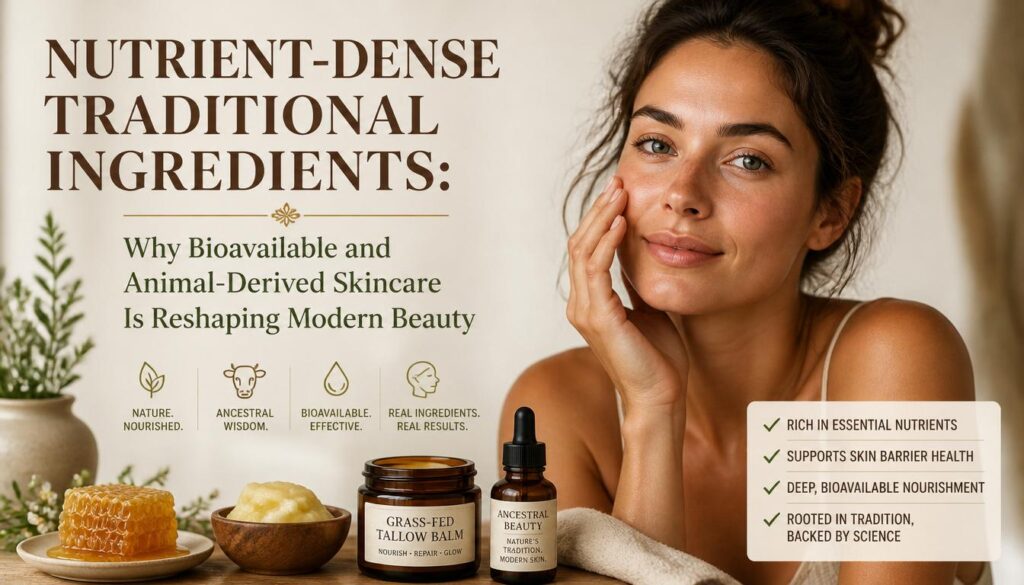
From beef tallow moisturizers and lanolin creams to salmon-derived regenerative treatments and grass-fed animal fats, interest in bioavailable and ancestral beauty ingredients has surged across the skincare world.
Social media platforms, wellness influencers, dermatology discussions, and longevity-focused beauty brands are fueling a growing fascination with:
- Traditional skincare remedies
- Animal-derived moisturizers
- Nutrient-rich natural fats
- Bioavailable vitamins
- Whole-ingredient formulations
- Skin barrier restoration
Experts say this movement reflects a broader consumer desire for:
- Simpler skincare
- Functional ingredients
- Skin barrier support
- Less irritation
- Traditional wellness practices
- Regenerative beauty approaches
At the same time, modern beauty consumers are becoming more skeptical of aggressive exfoliation, overloaded routines, and highly processed formulations. Instead, many are looking for skincare that nourishes the skin deeply and supports long-term resilience.
This guide explores why nutrient-dense traditional ingredients are trending, the science behind bioavailable skincare, the rise of animal-derived beauty products, and how ancestral skincare philosophies are influencing modern dermatology and wellness culture in the United States.
What Are Nutrient-Dense Traditional Ingredients?
Nutrient-dense skincare ingredients are substances naturally rich in vitamins, fatty acids, amino acids, minerals, and skin-supportive compounds.
Traditional skincare ingredients are often minimally processed and rooted in historical beauty practices used for centuries before modern cosmetics existed.
Examples include:
- Beef tallow
- Lanolin
- Emu oil
- Tallow balms
- Colostrum
- Bone marrow extracts
- Honey
- Beeswax
- Fermented botanicals
- Salmon-derived regenerative ingredients
- Herbal infusions
- Animal fats rich in fat-soluble vitamins
These ingredients are increasingly marketed as “bioavailable,” meaning the skin may recognize and utilize them more efficiently because of their structural similarity to naturally occurring skin lipids.
Why Traditional Skincare Is Trending Again
Several cultural and scientific trends are driving renewed interest in ancestral and animal-derived skincare.
1. Skin Barrier Awareness
One of the biggest skincare conversations in recent years revolves around damaged skin barriers.
Consumers dealing with:
- Redness
- Sensitivity
- Dryness
- Inflammation
- Over-exfoliation
- Retinoid irritation
are searching for gentler, more nourishing solutions.
Traditional fats and lipid-rich ingredients are often praised for their ability to support barrier repair and moisture retention.
2. The Rise of Skin Longevity
Modern skincare is increasingly focused on preserving long-term skin health rather than chasing overnight transformations.
Consumers now prioritize:
- Tissue resilience
- Hydration
- Inflammation reduction
- Collagen support
- Regenerative skincare
- Prevention over correction
This aligns closely with nutrient-dense skincare philosophies.
3. “Back-to-Basics” Beauty
Many consumers are exhausted by:
- Complex 10-step routines
- Endless product launches
- Harsh exfoliation
- Ingredient overload
Traditional skincare appeals to people seeking:
- Simpler routines
- Multi-functional ingredients
- Minimalist beauty
- Whole-ingredient skincare
4. Wellness Culture & Ancestral Health
The popularity of ancestral diets, functional medicine, and holistic wellness has heavily influenced skincare trends.
Consumers increasingly connect:
- Nutrition
- Gut health
- Inflammation
- Hormones
- Skin health
This has increased demand for skincare rooted in traditional nourishment and regenerative wellness practices.
What Does “Bioavailable” Mean in Skincare?
Bioavailability refers to how effectively the skin can absorb and utilize nutrients or compounds.
In skincare marketing, bioavailable ingredients are often promoted as being structurally compatible with the skin’s natural composition.
For example:
- Animal fats contain fatty acids similar to human sebum
- Lanolin closely resembles skin lipids
- Cholesterol-rich ingredients help reinforce the skin barrier
Experts say lipid compatibility may help improve:
- Moisture retention
- Skin softness
- Barrier function
- Ingredient penetration
However, dermatologists also caution that “bioavailable” has become a trendy marketing term and should not automatically be interpreted as scientifically superior in every context.
Why Animal-Derived Skincare Is Surging
Animal-derived skincare is one of the most controversial but rapidly growing categories in beauty.
Products featuring:
- Beef tallow
- Lanolin
- Emu oil
- Snail mucin
- Salmon DNA
- Colostrum
- Bone broth collagen
have exploded in popularity online.
Experts say this trend is partly driven by dissatisfaction with overly harsh skincare routines and highly processed formulations.
Consumers often describe animal-based skincare as:
- Richer
- More nourishing
- More compatible with dry skin
- Better for barrier repair
The Return of Beef Tallow Skincare
One of the biggest viral beauty trends in 2026 is beef tallow moisturizer.
Tallow is rendered animal fat traditionally used in cooking, candle-making, and skincare.
Modern tallow-based skincare products are marketed as:
- Nutrient-rich
- Bioavailable
- Deeply moisturizing
- Barrier-supportive
Tallow contains:
- Fat-soluble vitamins A, D, E, and K
- Stearic acid
- Oleic acid
- Palmitic acid
These fatty acids are naturally present in human skin lipids, which is one reason some consumers believe tallow works exceptionally well for dryness and sensitivity.
Why Consumers Love Tallow-Based Products
Fans of tallow skincare often report improvements in:
- Dry skin
- Eczema-prone skin
- Flaking
- Redness
- Barrier damage
- Retinoid irritation
Social media users frequently describe tallow balms as:
- Ultra-nourishing
- Minimal ingredient
- Less irritating than synthetic creams
However, dermatologists emphasize that results vary significantly by individual skin type.
The Science Behind Lipid-Rich Moisturizers
The skin barrier depends heavily on lipids, including:
- Ceramides
- Cholesterol
- Fatty acids
These components help:
- Prevent moisture loss
- Protect against irritation
- Maintain barrier integrity
Many traditional animal-derived ingredients naturally contain lipid profiles supportive of barrier repair.
This is one reason lipid-focused skincare has become central to modern barrier-repair trends.
Popular Traditional Ingredients Making a Comeback
1. Lanolin
Lanolin is a waxy substance derived from sheep’s wool.
It’s known for:
- Intense moisture retention
- Occlusive protection
- Healing dry skin
Lanolin remains popular in lip balms and barrier creams.
2. Honey
Honey has been used in skincare for centuries because of its:
- Humectant properties
- Antioxidants
- Soothing effects
- Antimicrobial potential
Raw and manuka honey are especially popular in natural skincare.
3. Beeswax
Beeswax helps create protective barriers that reduce transepidermal water loss.
It’s commonly used in:
- Salves
- Balms
- Barrier creams
4. Colostrum
Colostrum—nutrient-rich milk produced after birth—is increasingly used in wellness and skincare products.
It contains:
- Growth factors
- Proteins
- Immune-supportive compounds
Some regenerative skincare brands market colostrum as a barrier-supportive ingredient.
5. Salmon-Derived Ingredients
PDRN and salmon DNA skincare are becoming major regenerative beauty trends.
Experts say these ingredients may support:
- Collagen stimulation
- Healing
- Skin repair
- Hydration
6. Snail Mucin
Snail mucin remains one of K-beauty’s most enduring traditional-meets-modern skincare ingredients.
Fans praise it for:
- Hydration
- Barrier support
- Skin repair
- Calming irritation
The Link Between Traditional Ingredients and Barrier Repair
Barrier repair is one of the most dominant skincare movements in 2026.
Dermatologists increasingly emphasize that healthy skin depends on:
- Lipid balance
- Hydration
- Reduced inflammation
- Gentle skincare
Traditional nutrient-dense ingredients often contain naturally occurring lipids and emollients that support these goals.
This is one reason they’re frequently marketed for:
- Sensitive skin
- Dry skin
- Retinoid recovery
- Post-procedure healing
Why Simpler Skincare Routines Are Growing
Consumers are increasingly abandoning:
- Over-layered routines
- Daily exfoliation
- Excessive actives
- Harsh treatments
Instead, they’re adopting minimalist skincare focused on:
- Nourishment
- Barrier support
- Fewer products
- Long-term skin health
This movement is often called:
- Skinimalism
- Barrier-first skincare
- Slow beauty
- Longevity skincare
Traditional skincare ingredients fit naturally within this philosophy.
The Role of Traditional Ingredients in Regenerative Skincare
Modern regenerative skincare focuses on:
- Healing
- Tissue support
- Collagen preservation
- Cellular communication
- Inflammation reduction
Many traditional ingredients are now being combined with advanced biotechnology.
For example:
- Tallow + peptides
- Lanolin + ceramides
- Salmon DNA + exosomes
- Honey + growth factors
The result is a hybrid skincare category blending ancestral remedies with modern dermatology science.
Are Animal-Derived Ingredients Scientifically Better?
This question remains highly debated.
Potential Advantages
Some experts believe animal-derived ingredients may:
- Better mimic skin lipids
- Improve moisture retention
- Support barrier repair
- Deliver rich nourishment
Limitations & Concerns
Dermatologists also note:
- Research remains limited in some areas
- Individual skin reactions vary
- Certain ingredients may clog pores
- Ethical concerns exist
- Sustainability issues matter
Some consumers also prefer vegan or cruelty-free skincare alternatives.
Who May Benefit Most From Nutrient-Dense Skincare?
Traditional lipid-rich skincare may particularly benefit:
- Dry skin
- Mature skin
- Sensitive skin
- Barrier-damaged skin
- Post-procedure recovery
- Cold-weather dryness
However, oily or acne-prone skin users may need lighter formulations.
The Rise of “Edible Skincare” Marketing
Another major trend is skincare marketed similarly to nutrition.
Brands increasingly emphasize:
- Whole ingredients
- Nutrient density
- Bioavailability
- Skin nourishment
- Farm-to-face sourcing
- Functional wellness
This reflects the growing overlap between:
- Beauty
- Wellness
- Longevity culture
- Functional nutrition
Social Media’s Role in the Tallow & Traditional Beauty Boom
TikTok, Instagram, and wellness influencers have massively accelerated interest in ancestral skincare.
Viral videos often feature:
- DIY tallow balm recipes
- “Natural glow” transformations
- Minimalist skincare routines
- Beef tallow moisturizers
- Raw ingredient beauty trends
Some experts worry that social media oversimplifies skincare science, but there’s no doubt it has influenced consumer behavior dramatically.
The Future of Traditional Skincare
Experts predict the future of skincare will increasingly combine:
- Biotechnology
- Regenerative medicine
- Traditional ingredients
- Personalized skincare
- Barrier science
- Longevity-focused beauty
Emerging trends may include:
- Lab-grown bioidentical lipids
- Regenerative animal-free peptides
- Fermented ancestral ingredients
- AI-driven barrier analysis
- Personalized nutrient skincare
The skincare industry is evolving toward a balance between ancient wisdom and modern science.
Final Thoughts
The surge in nutrient-dense traditional skincare reflects a larger transformation happening across the beauty industry.
Consumers are moving away from harsh, overly complicated routines and toward products that prioritize:
- Barrier repair
- Long-term skin health
- Nourishment
- Regeneration
- Simplicity
- Bioavailable ingredients
Animal-derived and ancestral skincare ingredients may not be perfect for everyone, and scientific evidence is still evolving in some areas. But their popularity highlights an important cultural shift: people increasingly want skincare that feels functional, comforting, and biologically supportive rather than aggressively corrective.
The future of beauty is no longer just about chasing flawless skin overnight.
It’s about building resilient, healthy skin through nourishment, prevention, and sustainable care over time.