From Silicon Valley CEOs to everyday fitness enthusiasts, one trend is dominating the health space:
👉 Biohacking
Cold plunges. Intermittent fasting. Wearable trackers. Nootropic supplements.
It all sounds futuristic—but is biohacking truly the secret to better health… or just another wellness buzzword?
In this complete, research-backed guide, we’ll break down:
- What biohacking really is
- Popular biohacking methods
- What science actually supports
- Risks, myths, and expert opinions
- How to biohack safely (if at all)
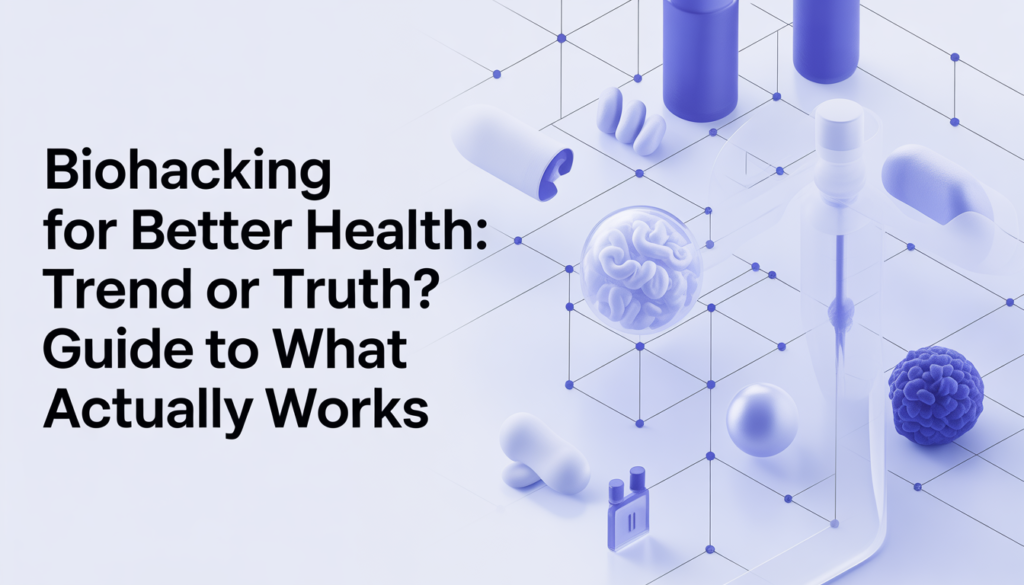
🖼️ What Biohacking Looks Like Today
Modern biohacking blends technology, nutrition, and lifestyle optimization:
- Fitness trackers and smartwatches
- Diet experimentation (keto, fasting)
- Sleep optimization tools
- Supplements and nootropics
👉 It’s essentially about using data and science to optimize your body and mind.
🧠 What Is Biohacking?
Biohacking is a DIY approach to improving health and performance through lifestyle, diet, and sometimes technology.
It includes:
- Small habit changes (sleep, diet, exercise)
- Data tracking (wearables, blood tests)
- Experimental approaches (supplements, cold therapy)
👉 Experts describe it as “self-directed biology” aimed at optimizing well-being
📊 Why Biohacking Is Trending in the U.S. (2026)
Biohacking has exploded in popularity due to:
- Increased focus on longevity
- Rise of wearable health tech
- Desire for personalized health solutions
- Influence of social media and wellness influencers
👉 Americans are shifting toward preventive, data-driven health strategies.
⚖️ Types of Biohacking (From Safe to Extreme)
🟢 1. Lifestyle Biohacking (Most Common & Safe)
- Sleep optimization
- Exercise routines
- Healthy eating
👉 These are essentially proven health habits rebranded.
🟡 2. Nutritional Biohacking
- Intermittent fasting
- Keto or personalized diets
- Supplement use
👉 Some approaches are evidence-based, others are not.
🔴 3. Tech-Based Biohacking
- Wearables (Fitbit, Apple Watch)
- Continuous glucose monitors
- Sleep trackers
👉 These provide data—but require proper interpretation.
⚠️ 4. Experimental Biohacking
- Genetic modification
- Implants
- DIY biology experiments
👉 These carry significant risks and lack regulation
🧪 Does Biohacking Actually Work?
Here’s the honest answer:
👉 Yes—and no.
✔ What Works (Science-Backed)
Some “biohacks” are simply proven health strategies:
1. Intermittent Fasting
Supports metabolic health
2. Exercise & Strength Training
Improves longevity and muscle health
3. Sleep Optimization
Enhances recovery and brain function
4. Stress Reduction (Meditation, Breathwork)
Improves mental health
👉 These are supported by extensive research and widely recommended
❌ What’s Overhyped
- Expensive supplements
- “Miracle” longevity hacks
- Extreme diets
- Unregulated DIY experiments
👉 Many biohacking claims are ahead of scientific evidence.
🧠 Why Biohacking Feels Effective
Even when science is limited, biohacking can feel powerful due to:
1. Data Tracking
Seeing progress motivates behavior
2. Placebo Effect
Belief can improve outcomes
3. Lifestyle Improvements
Many hacks are simply healthier habits
👉 The benefits often come from behavior change—not the hack itself.
📊 Biohacking Benefits vs Risks
| Category | Benefits | Risks |
|---|---|---|
| Lifestyle Hacks | Proven health improvements | Minimal |
| Supplements | Possible benefits | Side effects |
| Tech Tracking | Better awareness | Misinterpretation |
| Experimental Hacks | Innovation potential | Safety concerns |
⚠️ Risks of Biohacking You Should Know
Biohacking isn’t always harmless.
🚨 1. Lack of Regulation
Many practices aren’t scientifically tested
🚨 2. Self-Experimentation Risks
Trying unproven methods can cause harm
🚨 3. Misinformation
Social media often spreads exaggerated claims
🚨 4. Over-Reliance on Data
Too much tracking can lead to anxiety
👉 Experts warn that biohacking often happens outside regulated research environments, increasing risks
💡 10 Biohacks That Actually Work (Backed by Science)
1. Prioritize Sleep (7–9 hours)
2. Strength Train 2–3x/week
3. Eat Whole, Balanced Foods
4. Stay Hydrated
5. Get Morning Sunlight
6. Practice Stress Management
7. Walk Daily
8. Limit Ultra-Processed Foods
9. Track Habits (Not Obsessively)
10. Maintain Consistency
👉 These are simple—but incredibly effective.
🧴 Popular Biohacking Trends (Explained)
❄️ Cold Exposure (Ice Baths)
- May reduce inflammation
- Improves recovery
👉 Evidence is still emerging
⏱️ Intermittent Fasting
- Supports metabolic health
- Helps weight management
🧠 Nootropics (Brain Supplements)
- Claimed to boost focus
- Mixed scientific evidence
📱 Wearable Tech
- Tracks heart rate, sleep, activity
- Helps build awareness
👉 Some trends are useful—but not revolutionary.
This article naturally targets:
- biohacking benefits and risks
- does biohacking work
- biohacking for beginners USA
- health optimization techniques
- longevity biohacking
- wearable health technology trends
- biohacking science evidence
🚫 Common Biohacking Myths
❌ Myth 1: Biohacking Is a Shortcut to Health
👉 Real health requires consistency
❌ Myth 2: More Supplements = Better Results
👉 Can cause harm
❌ Myth 3: Data Equals Accuracy
👉 Devices are not always precise
❌ Myth 4: Extreme Hacks Work Better
👉 Simple habits are often more effective
👩⚕️ Who Should Try Biohacking?
✔ Beginners:
Start with lifestyle changes
✔ Fitness Enthusiasts:
Use tracking tools
✔ Tech Lovers:
Explore wearable devices
👉 Avoid experimental methods without medical guidance.
🌎 The Future of Biohacking in the U.S.
Biohacking is evolving into:
- Personalized medicine
- AI-driven health tracking
- Preventive healthcare systems
👉 The future is data-driven—but science-based.
🧾 Pros and Cons of Biohacking
✅ Pros
- Encourages health awareness
- Promotes lifestyle improvements
- Supports personalized health
❌ Cons
- Can be misleading
- Lacks regulation
- Risk of unsafe experimentation
🏁 Final Verdict: Trend or Truth?
✔ Biohacking is both a trend AND a truth.
👉 The truth:
- Lifestyle-based biohacks work
👉 The trend:
- Extreme, unproven methods are overhyped
✨ Conclusion
Biohacking isn’t magic—it’s modern self-improvement with a scientific twist.
The real takeaway?
👉 You don’t need extreme hacks to improve your health.
Focus on:
✔ Sleep
✔ Nutrition
✔ Exercise
✔ Consistency