
The world of cosmetic dermatology is changing rapidly. For years, resurfacing lasers were viewed as standalone procedures capable of transforming skin texture, pigmentation, and wrinkles through sheer intensity alone. Patients would undergo treatments, endure redness and peeling, and simply wait for their skin to recover.
But in 2026, dermatologists are taking a far more strategic and regenerative approach.
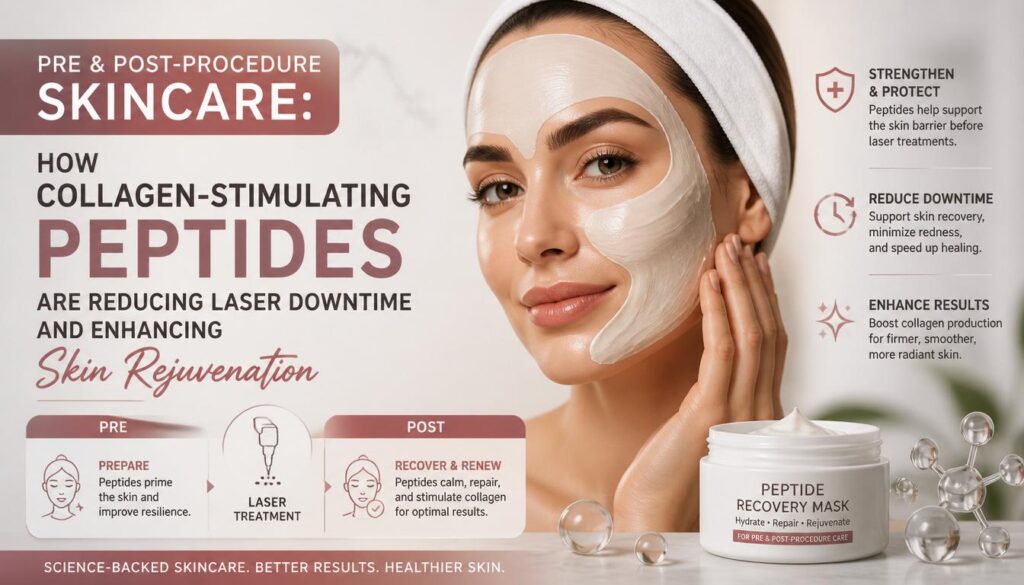
Today, the focus is no longer just on the procedure itself—it’s on how the skin is prepared beforehand and supported afterward. One of the biggest trends driving this evolution is the use of collagen-stimulating peptides before and after resurfacing laser treatments to reduce downtime, improve healing, and maximize long-term results.
Experts say pre-conditioning the skin with peptide-rich skincare may help optimize the skin barrier, support collagen synthesis, calm inflammation, and accelerate tissue recovery after procedures.
This shift reflects a larger movement toward:
- Regenerative aesthetics
- Skin longevity
- Barrier-first skincare
- Recovery-focused dermatology
- Preventative anti-aging
Consumers are increasingly prioritizing healthier skin function and long-term tissue quality instead of relying solely on aggressive treatments or heavy serums.
This guide explains how collagen-stimulating peptides work, why dermatologists recommend them around resurfacing laser procedures, and how modern pre- and post-procedure skincare is reshaping the future of aesthetic medicine in the United States.
Why Pre- & Post-Procedure Skincare Is Becoming Essential
Modern dermatology now recognizes that treatment results are influenced not only by the procedure itself, but also by:
- Skin barrier health
- Inflammation levels
- Hydration status
- Recovery support
- Collagen response
- Cellular repair capacity
In the past, many patients focused only on the laser session while neglecting their skin before and after treatment.
Today, experts say optimized skincare can:
- Improve treatment tolerance
- Reduce irritation
- Minimize recovery time
- Support faster healing
- Enhance collagen remodeling
- Improve overall skin quality
This philosophy is especially important for resurfacing lasers, which intentionally create controlled injury in the skin to stimulate renewal.
What Are Resurfacing Lasers?
Resurfacing lasers are professional dermatology treatments designed to improve skin texture and tone by stimulating controlled skin regeneration.
These treatments target:
- Fine lines
- Wrinkles
- Acne scars
- Sun damage
- Hyperpigmentation
- Uneven texture
- Enlarged pores
Common resurfacing lasers include:
- Fraxel
- CO2 lasers
- Erbium lasers
- Halo lasers
- Clear + Brilliant
- Fractional resurfacing systems
These technologies work by creating micro-injuries in the skin that trigger healing and collagen production.
However, because they intentionally stress the skin, proper preparation and recovery are critical.
Why Downtime Happens After Laser Treatments
Laser resurfacing treatments trigger inflammation as part of the healing process.
After treatment, patients commonly experience:
- Redness
- Swelling
- Heat sensation
- Peeling
- Dryness
- Tightness
- Temporary sensitivity
More aggressive lasers may require days or even weeks of healing.
This is where peptide-focused skincare has become increasingly important.
Dermatologists now believe supporting the skin biologically before treatment can improve how efficiently it repairs afterward.
What Are Collagen-Stimulating Peptides?
Peptides are short chains of amino acids that act as signaling molecules within the skin.
Think of them as messengers that tell skin cells what to do.
Different peptides can help:
- Stimulate collagen production
- Support elastin formation
- Reduce inflammation
- Improve hydration
- Strengthen the skin barrier
- Enhance wound healing
Because collagen loss is one of the primary drivers of aging, peptides have become central to regenerative skincare and skin longevity treatments.
How Peptides Support Laser Procedures
Peptides are increasingly used before and after resurfacing lasers because they may help optimize the skin’s regenerative response.
Experts believe peptide-rich skincare may:
- Improve barrier resilience
- Support fibroblast activity
- Encourage collagen synthesis
- Reduce inflammatory stress
- Enhance recovery speed
- Improve treatment tolerance
This regenerative approach aligns with the growing movement toward “smart skincare” rather than aggressive over-treatment.
The Science Behind Collagen Stimulation
Collagen is the structural protein responsible for skin firmness, elasticity, and strength.
Starting in the mid-to-late 20s, collagen production naturally declines.
Environmental factors accelerate collagen breakdown, including:
- UV exposure
- Pollution
- Smoking
- Stress
- Poor sleep
- Chronic inflammation
Laser resurfacing treatments stimulate new collagen formation by creating controlled damage within the skin.
Peptides may help amplify this process by supporting fibroblast signaling and tissue repair pathways.
Why Dermatologists Are “Prepping” Skin Before Procedures
Pre-procedure skincare is now considered one of the most important parts of modern cosmetic dermatology.
Experts say healthy skin tends to:
- Heal faster
- Respond better to treatments
- Experience less irritation
- Produce stronger collagen responses
Dermatologists increasingly recommend peptide-based skincare before:
- Fractional lasers
- Microneedling
- Radiofrequency procedures
- Chemical peels
- PRP treatments
This process is often called:
- Skin conditioning
- Skin priming
- Barrier optimization
- Pre-treatment preparation
Key Benefits of Using Peptides Before Laser Resurfacing
1. Reduced Downtime
One of the biggest reasons peptide skincare is trending is its potential to shorten visible recovery time.
Patients may experience:
- Less redness
- Reduced dryness
- Faster barrier repair
- Improved hydration
- Quicker comfort restoration
This is especially appealing to consumers wanting effective treatments without prolonged social downtime.
2. Improved Collagen Response
Peptides may support fibroblast activity, helping the skin generate stronger collagen remodeling after laser procedures.
Experts increasingly describe this as part of the “collagen banking” movement in skincare.
3. Better Barrier Function
A healthy skin barrier improves the skin’s ability to tolerate resurfacing treatments.
Barrier-supportive peptides are often combined with:
- Ceramides
- Hyaluronic acid
- Panthenol
- Squalane
to reduce irritation risk.
4. Reduced Inflammation
Inflammation is necessary for healing—but excessive inflammation can increase:
- Redness
- Hyperpigmentation
- Irritation
- Delayed recovery
Some peptides may help regulate inflammatory pathways and improve skin resilience.
5. Enhanced Long-Term Results
Recovery-focused skincare is no longer just about healing quickly.
Experts increasingly believe optimized aftercare may improve:
- Skin texture
- Elasticity
- Tone consistency
- Long-term collagen quality
Best Types of Peptides for Pre-Procedure Skincare
Not all peptides function the same way.
Here are some of the most popular categories in regenerative skincare.
Signal Peptides
Signal peptides encourage collagen and elastin production.
These are among the most commonly used peptides in anti-aging and pre-procedure formulations.
Carrier Peptides
Carrier peptides deliver trace minerals like copper to the skin, supporting healing and tissue repair.
Copper peptides are especially popular in regenerative dermatology.
Neurotransmitter Peptides
Sometimes called “Botox-like peptides,” these may help soften expression lines while supporting smoother skin texture.
Growth Factor Peptides
Growth factor-inspired peptides are increasingly paired with regenerative skincare technologies like:
- Exosomes
- PRP
- LED therapy
- Laser resurfacing
Best Ingredients to Pair With Peptides
Peptides work best when combined with supportive skincare ingredients.
Ceramides
Ceramides strengthen the skin barrier and reduce moisture loss.
Barrier repair is one of the biggest skincare trends in 2026.
Hyaluronic Acid
Hydration is critical before and after laser procedures.
Hyaluronic acid helps:
- Retain water
- Reduce dryness
- Improve skin comfort
Niacinamide
Niacinamide supports:
- Barrier repair
- Redness reduction
- Oil regulation
- Skin resilience
Panthenol
Panthenol (vitamin B5) is commonly used in recovery skincare because it helps soothe irritated skin.
Growth Factors & Exosomes
These regenerative ingredients are becoming increasingly popular alongside peptide-based skincare.
Experts say they may help:
- Accelerate healing
- Improve tissue communication
- Enhance collagen remodeling
Ingredients to Avoid Before Laser Treatments
Dermatologists often recommend temporarily avoiding:
- Retinoids
- Strong acids
- Physical scrubs
- Benzoyl peroxide
- Harsh exfoliants
before resurfacing procedures to minimize irritation risk.
What Post-Laser Skincare Looks Like in 2026
Modern post-procedure skincare is becoming far simpler and more recovery-focused.
Instead of layering multiple aggressive actives, dermatologists increasingly recommend:
- Gentle cleanser
- Peptide or healing serum
- Barrier-repair moisturizer
- Sunscreen
Experts warn that overcomplicated routines can worsen inflammation and delay healing.
The Growing Popularity of Recovery Skincare
The skincare industry is increasingly creating products specifically designed for:
- Laser recovery
- Microneedling aftercare
- Barrier repair
- Post-procedure hydration
- Collagen support
Consumers now understand that:
- Healthy skin heals better
- Strong barriers improve results
- Recovery is part of the treatment itself
This has fueled massive growth in regenerative skincare categories.
Why Simpler Routines Are Replacing Aggressive Layering
For years, skincare culture encouraged:
- Multiple acids
- Daily exfoliation
- Over-layering serums
- “More is better” routines
But experts increasingly believe chronic inflammation accelerates aging rather than preventing it.
As a result, modern skincare is shifting toward:
- Barrier-first routines
- Anti-inflammatory ingredients
- Recovery support
- Skin longevity
Peptide-based skincare fits perfectly within this philosophy.
The Connection Between Skin Longevity and Laser Recovery
The skin longevity movement focuses on preserving:
- Collagen quality
- Tissue health
- Barrier function
- Cellular resilience
Instead of chasing temporary glow, consumers are investing in treatments that improve skin function over time.
Pre- and post-procedure peptide skincare reflects this larger regenerative trend.
The Future of Procedure-Supportive Skincare
Experts predict future skincare innovations will become even more personalized and biologically driven.
Emerging trends include:
- AI-guided recovery tracking
- Personalized peptide formulas
- Exosome-enhanced healing serums
- Smart LED recovery masks
- Growth factor technology
- Microbiome-supportive aftercare
- Regenerative laser protocols
The future of dermatology is increasingly focused on prevention, repair, and long-term skin health rather than aggressive correction alone.
Final Thoughts
Pre- and post-procedure skincare is transforming the way dermatologists approach resurfacing lasers and regenerative aesthetics.
Today, treatment success is no longer determined solely by the laser itself. It also depends on how effectively the skin is prepared beforehand and supported during recovery afterward.
Collagen-stimulating peptides have become one of the most exciting tools in this movement because they align perfectly with modern skincare priorities:
- Barrier repair
- Collagen support
- Reduced downtime
- Skin longevity
- Natural-looking rejuvenation
The future of skincare is no longer about punishing the skin into submission.
It’s about helping the skin heal smarter, stronger, and more beautifully over time.